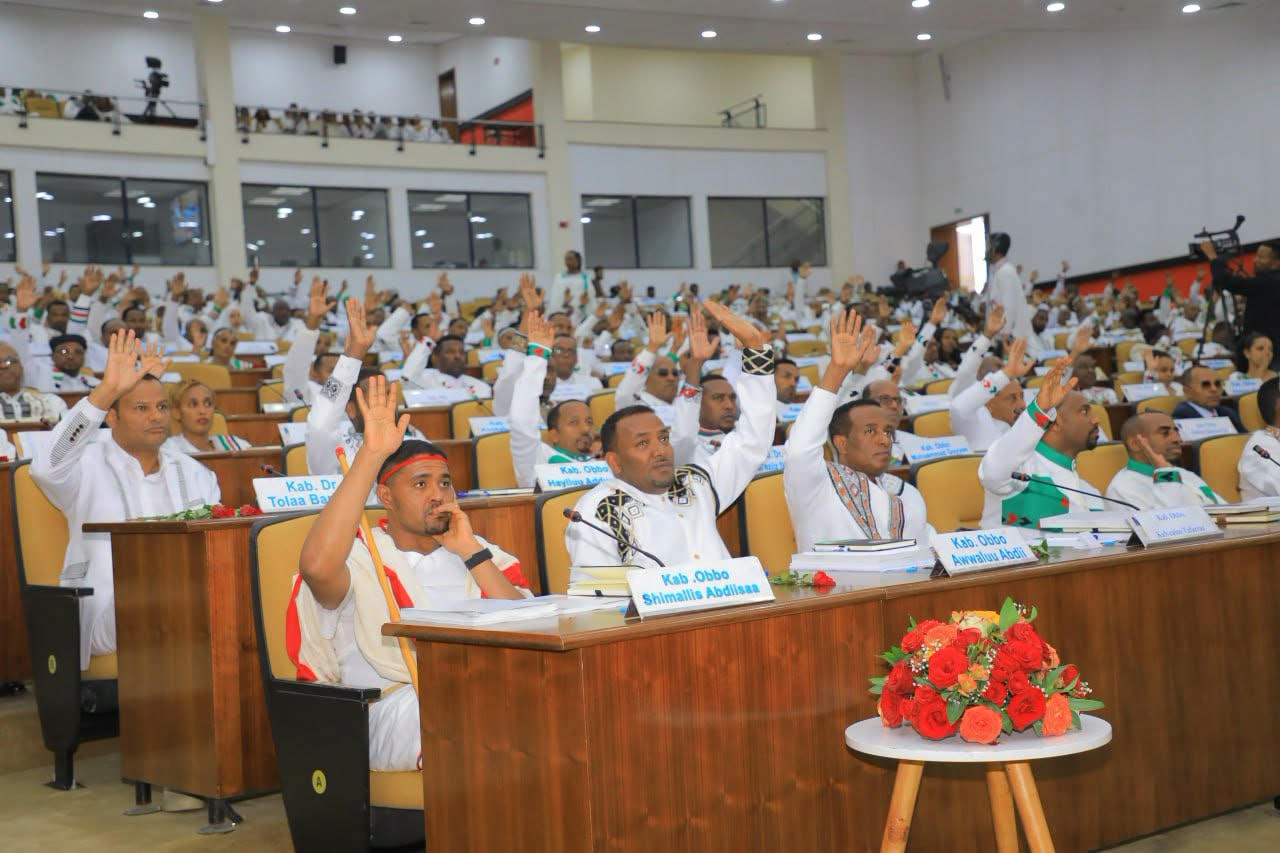
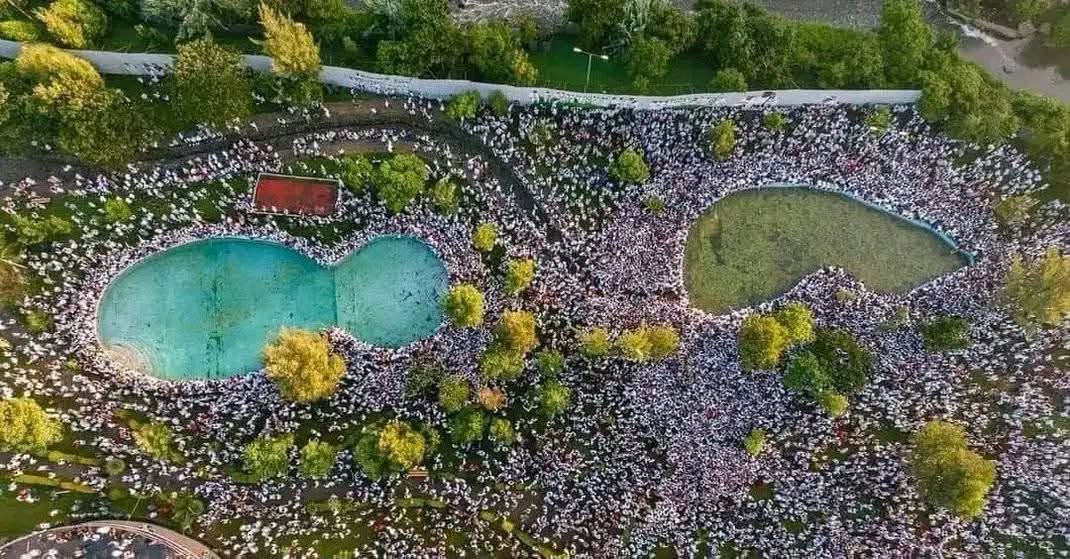
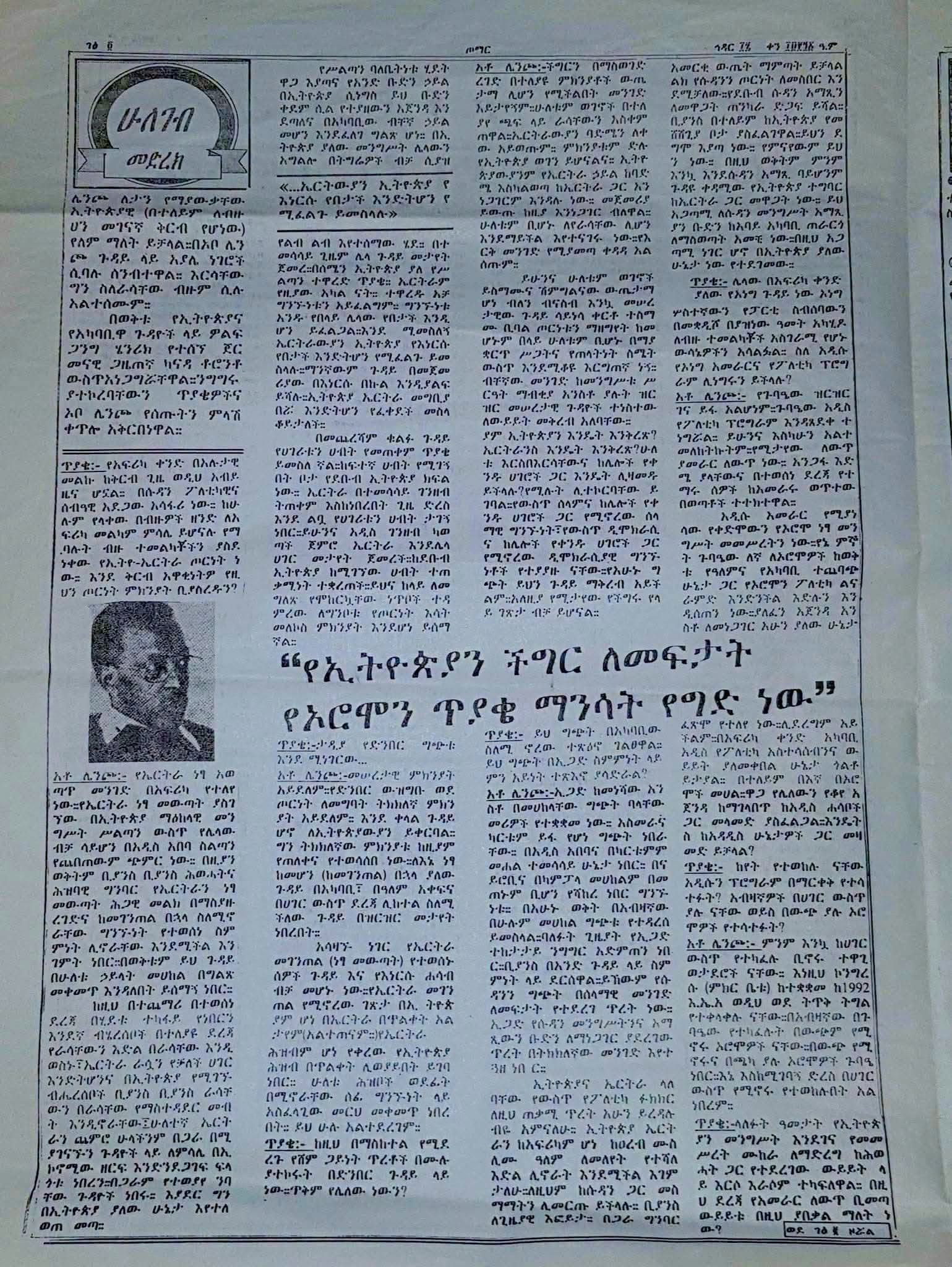
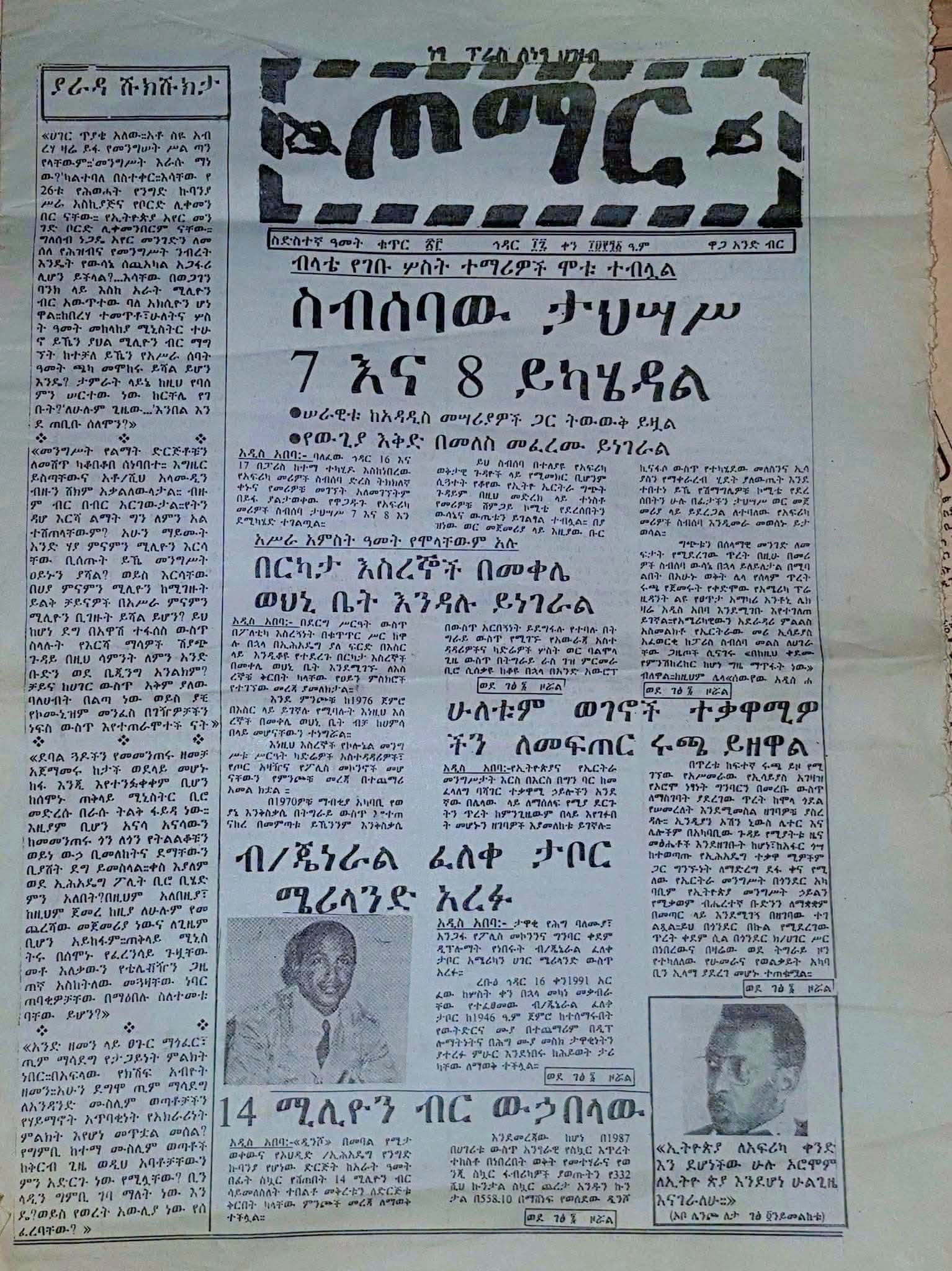
Tajaajilli Kominikeeshinii Oromiyaa ergaa kana ifoomseera. Rifoormiin kun sirna bulchiinsaa fooyyessuu fi tajaajila uummataaf dhiyaatu saffisiisuuf kan qophaa’e ta’uu ibsameera.
Godina Oromiyaa Bahaa
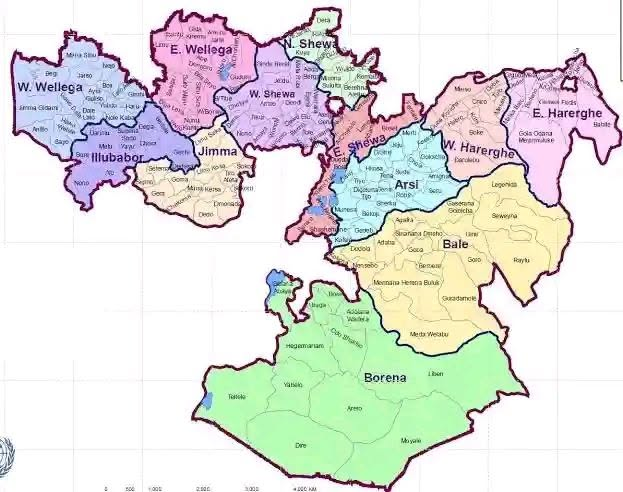
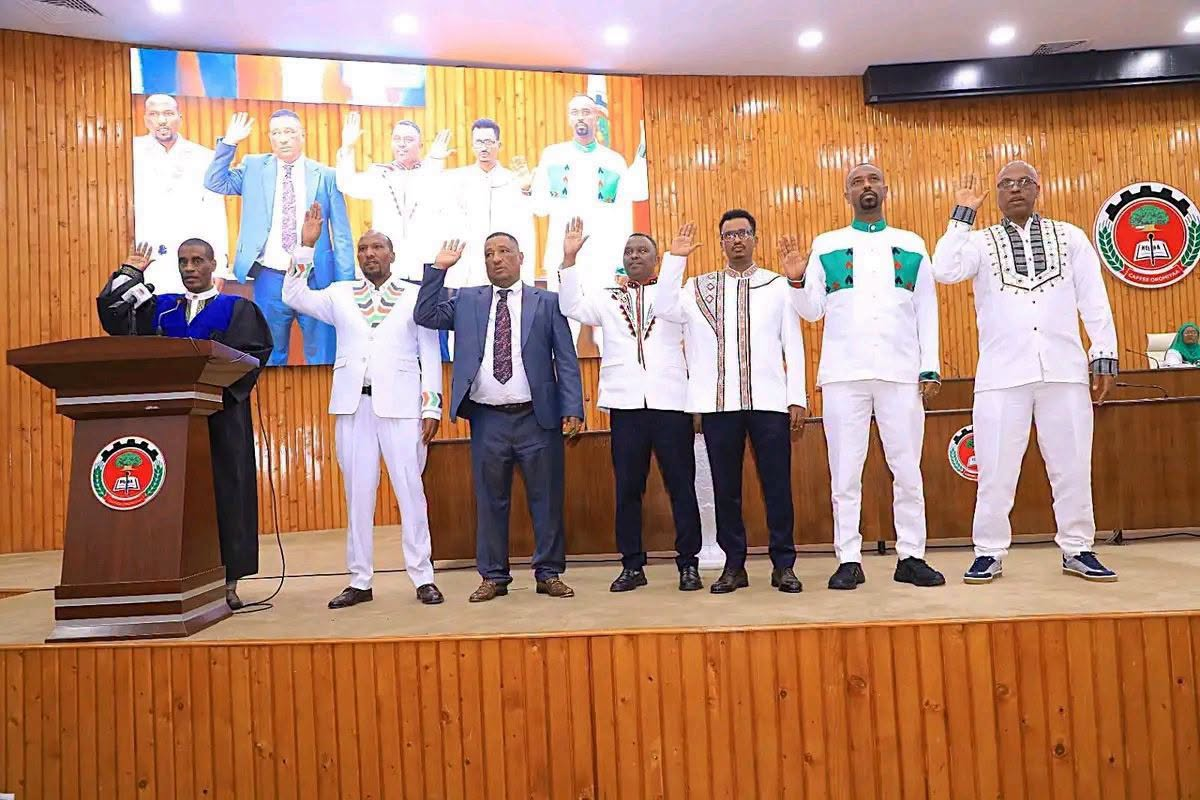
Godina Oromiyaa Bahaa kan teessoon isaa Harar ta’eef, Obbo Abdurrahmaan Abdallaa sadarkaa itti aanaa Pirezidantiitti Bulchaa Godina Oromiyaa Bahaa ta’anii ramadamaniiru.
Aadde Miski Muhammad sadarkaa Hoogganaa Biirootti Itti aantuu Bulchaa Damee Misoomaa Godina Oromiyaa Bahaa ta’anii, teessoon isaanii Ciroo ta’a. Obbo Anas Aliyyii sadarkaa Hoogganaa Biirootti Itti aanaa Bulchaa Damee Nagaafi Haqaa Godina Oromiyaa Bahaa ta’anii, teessoon isaanii Galamsoo ta’a.
Addis Ababa, September 12, 2019 (ENA) — Field Marshal Birhanu Jula, Chief of the General Staff of the Ethiopian National Defense Force, has declared that Ethiopia has honored him with its highest recognition, and that he has withheld nothing in service to his nation.
“I am honored that Ethiopia has given me the highest honor bestowed upon a person,” Field Marshal Birhanu said. “There is nothing I have withheld for my country Ethiopia.”
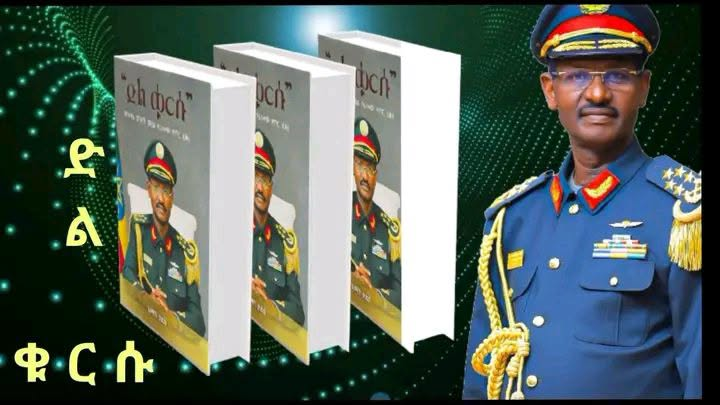
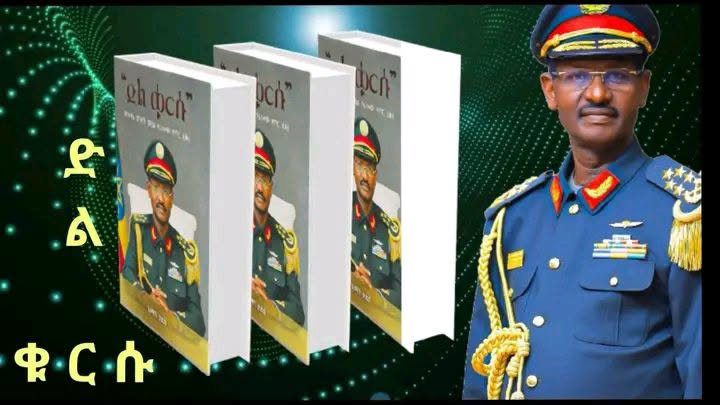
The Field Marshal made these remarks during a ceremony held this evening to launch a book titled “Dil Qursuu” (The Unbroken Bond), which focuses on his life story and the military journey he has traversed.
A Life of Service, A Legacy of Courage
The book, written to chronicle the life and military career of Field Marshal Birhanu Jula, was officially inaugurated at the ceremony. It details his journey from childhood through to his rise to the highest ranks of the Ethiopian military, capturing the history of his heroism and dedication to national service.
During the event, Field Marshal Birhanu conveyed a powerful message: “My country has honored me, and I, in turn, have nothing to withhold from my country. I will serve with my full strength.”
The book, he noted, is not only a record of his personal life but also a valuable resource for universities, historians, and researchers studying the Ethiopian National Defense Force.
Preserving History, Inspiring Generations
Field Marshal Birhanu emphasized the importance of documenting the history of heroes for future generations. “Writing the history of heroes and elevating it for generations, and honoring the names of heroes, will inspire the younger generation to stand up for their country in greater numbers,” he said.
He stated that books chronicling the heroes of the Defense Force will help build the future generation. “Building a country requires nurturing a generation,” he affirmed, underscoring the role of historical documentation in shaping national identity and patriotic commitment.
A Detailed Account of an Extraordinary Journey
The book “Dil Qursuu” is divided into 8 chapters and spans 355 pages. It provides a comprehensive account of Field Marshal Birhanu’s life, beginning from his childhood and tracing his path through the various stages of his military career up to his current position at the pinnacle of the Ethiopian defense establishment.
The title “Dil Qursuu” — meaning “The Unbroken Bond” — reflects the enduring connection between the Field Marshal and his nation, a bond that has never been severed despite the many challenges and sacrifices of his military journey.
A Testament to Duty and Patriotism
The launch of this book serves as a testament to the values of duty, sacrifice, and patriotism that Field Marshal Birhanu Jula embodies. His words — “I have withheld nothing from my country” — resonate as a powerful declaration of selfless service, a reminder of the profound commitment required of those who take up arms in defense of their nation.
For Ethiopia, the book is more than a biography. It is a historical document, a teaching tool, and an inspiration for generations to come. It reminds young Ethiopians that heroism is not merely a thing of the past but a living tradition, carried forward by those who serve with honor and dedication.
A Nation’s Gratitude
Field Marshal Birhanu’s statement — “Ethiopia has honored me with its highest recognition” — reflects a reciprocal relationship between the nation and its servants. The honor bestowed upon him is not merely a personal accolade; it represents the gratitude of a nation for a lifetime of service, sacrifice, and unwavering commitment.
As the book “Dil Qursuu” takes its place in the historical record, it stands as both a tribute to one man’s extraordinary journey and a beacon for future generations — a reminder that the bond between a patriot and his country is, indeed, unbroken.
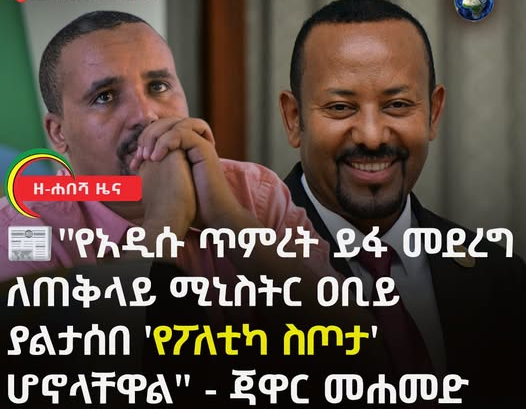
(Zehabesha, ADDIS ABABA) — Political analyst and activist Jawar Mohammed has released a comprehensive strategic and political analysis of the newly formed “Survival Alliance” (Alliance for Survival), a coalition established against the Ethiopian federal government that reportedly includes the Tigray People’s Liberation Front (TPLF), the Eritrean government, the Oromo Liberation Army (OLA/Shane), and Fano.
The analysis, which has circulated widely among political observers, paints a picture of a coalition fraught with internal tensions, where the stakes vary dramatically between members and where recent military and political decisions will determine its ultimate fate.
A Coalition of Unequal Stakes
According to Jawar’s analysis, the Survival Alliance represents an existential question for some of its members—particularly the TPLF and Eritrea—for whom the coalition is a matter of life and death, survival or annihilation. If the alliance succeeds, it could preserve their political standing; if it fails, it could accelerate their destruction.
For Fano and the OLA/Shane, however, the calculation is different. Jawar argues that for these groups, the alliance is a strategic matter rather than an existential threat. They do not face the same level of risk if the coalition collapses, giving them greater flexibility in their commitments.
The Ball is in Tigray’s Court
The analysis suggests that the immediate burden of action falls on the TPLF. Having exerted significant pressure for the alliance to be publicly announced, the TPLF now faces a critical test: if it does not launch a large-scale and decisive offensive soon, it will struggle to bring other alliance members into active operation.
The Eritrean government, meanwhile, is said to be pursuing a “wait and see” strategy, seeking to keep the war as far from its borders as possible. According to Jawar’s analysis, Eritrea will only enter direct combat if the TPLF either wins decisively or is defeated and pushed back to Eritrean territory.
The Role of External Actors
A crucial dimension of the conflict, according to the analysis, is the role of external supporters. How much force Egypt is willing to commit to break the air superiority enjoyed by Prime Minister Abiy Ahmed and the United Arab Emirates (UAE), as well as how much support the UAE and Saudi Arabia provide to whom, will significantly determine the war’s trajectory.
Additionally, the analysis suggests that if Eritrea enters the war directly, Prime Minister Abiy may seize the opportunity to link his “Red Sea and Assab” agenda to existential and security concerns, potentially making it a central focus of the conflict.
The Great Paradox
The most significant and controversial conclusion of Jawar’s analysis concerns what he describes as the “stunning contradiction” created by the alliance’s public announcement.
On one hand, the formation of the alliance strengthens the TPLF’s negotiating position with the government, allowing it to demonstrate that it has “another option” at the negotiating table.
On the other hand, the same public announcement has handed Prime Minister Abiy’s administration what Jawar describes as a “political gift from the sky.” The government can now reinforce its long-standing narrative of a “security threat emanating from the north,” using it as a powerful tool to mobilize public opinion—particularly among the Oromo people—and consolidate support around its leadership.
The True Measure of Success
Jawar’s analysis concludes that the success of this alliance will not be measured by its public statements, but by the internal cohesion and coordination that forces with vastly different territorial ambitions and histories—such as Fano and the TPLF—can demonstrate on the battlefield, and how they withstand the government’s counter-offensive capacity.
The coming weeks and months will reveal whether the Survival Alliance can translate its public declaration into coordinated military action, or whether its internal contradictions will prove insurmountable.
About the Analyst:
Jawar Mohammed is a prominent Oromo political analyst, activist, and former media owner known for his commentary on Ethiopian politics, federalism, and Oromo nationalism. He has been a controversial figure in Ethiopian political discourse, advocating for Oromo rights and systemic reform.
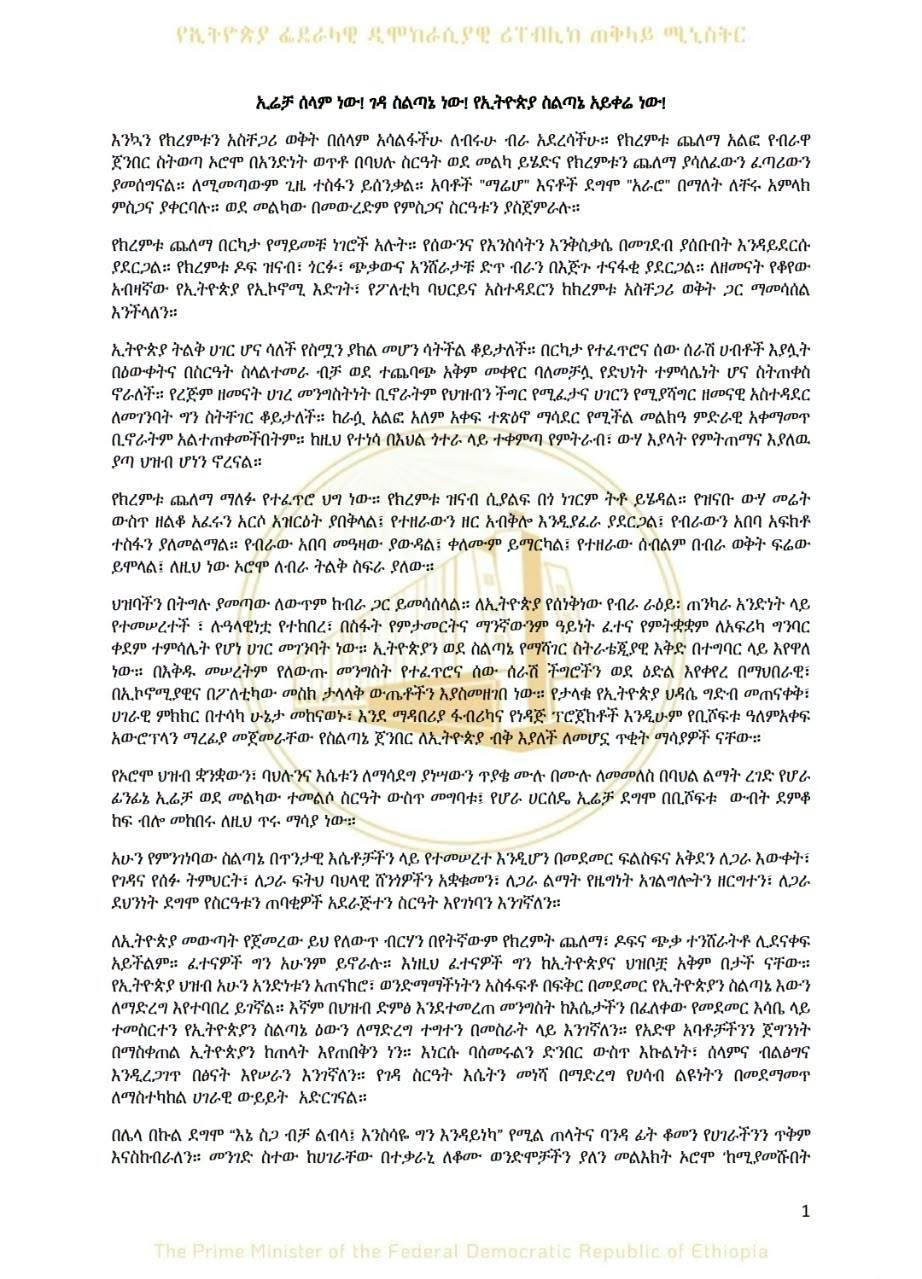
ADDIS ABABA — A prominent Oromo advocacy organization has formally rejected the newly formed “Ethiopian Peoples’ Forces Alliance for Survival,” accusing the coalition of failing to acknowledge the historical suffering of the Oromo people and of engaging in political opportunism rather than genuine problem-solving.
In a detailed statement released on 21 September 2026, Advocacy for Oromia outlined its objections to the alliance, which was established on 10/2019 E.C. (Ethiopian Calendar) and claims to represent a broad coalition of Ethiopian peoples against the current government.
The Alliance’s Platform
The Ethiopian Peoples’ Forces Alliance for Survival presents itself as a unified front against what it describes as a regime that has institutionalized national and religious divisions. Its stated objectives include removing the current government through “any means necessary,” establishing a transitional government, ensuring security for all citizens, and rebuilding the economy. The alliance explicitly calls for the right to self-determination for seven major ethnic groups: Oromo, Amhara, Tigray, Afar, Somali, Benishangul-Gumuz, and Gambella.
The alliance’s rhetoric is sweeping: “We have reached a point where we must unite to save ourselves and our country,” reads its preamble, which accuses the current regime of fueling conflicts, engaging in widespread human rights violations, and pushing the country to the brink of disaster.
The Oromo Rejection
Advocacy for Oromia, however, sees the alliance as fundamentally flawed. In its statement, the organization argues that the coalition’s generic language about “immense suffering” and “widespread displacement” deliberately avoids naming the Oromo people as specific victims of systemic oppression.
“The harm includes, but is not limited to, land dispossession, political marginalization, cultural suppression, and economic exploitation under successive Ethiopian regimes—the imperial era, the Derg regime, the EPRDF administration, and continuing under the current government,” the statement reads. “This omission is not accidental; it reflects a deliberate refusal to centre Oromo historical trauma within the alliance’s political framework.”
The advocacy group further accuses the alliance of refusing to accept the reality of systemic oppression inflicted upon the Oromo people by past regimes. Rather than demanding accountability for historical wrongs, the alliance frames the current crisis as a departure from an otherwise acceptable trajectory—a framing that Advocacy for Oromia rejects outright.
A Question of Strategy
At the heart of the dispute lies a fundamental strategic disagreement within Ethiopian opposition politics: whether to prioritize unity against a common enemy or to insist upon historical justice as a precondition for any alliance.
The alliance positions itself as a broad-based coalition, calling for unity among Ethiopia’s diverse ethnic groups to confront a shared adversary. Its document lists self-determination for multiple peoples and declares that “the unity of the Ethiopian peoples is paramount.”
Advocacy for Oromia, however, argues that without acknowledging past wrongs, any coalition risks reproducing the same structural injustices that have historically subjugated the Oromo people. “Formal recognition of Oromo rights within a reformed Ethiopian state is insufficient,” the statement asserts. “What is required is transformative justice that addresses the structural legacy of Oromo dispossession.”
The “Survival” Critique
The advocacy group also takes issue with the alliance’s very name. In the original Oromo statement, Advocacy for Oromia notes that the alliance is called “Survival”—a designation the group argues reveals its limited and inadequate scope.
“The alliance is named ‘Survival,’ which reveals its limited and inadequate scope,” the statement reads. “It is not founded to genuinely resolve the country’s problems, but rather to engage in political maneuvering and gamesmanship.”
This critique suggests that the alliance’s focus on mere survival—bare existence—falls far short of the Oromo struggle for liberation, justice, and systemic transformation.
Political Opportunism Alleged
The most serious charge leveled by Advocacy for Oromia is that the alliance is a vehicle for political opportunism. The group points to the alliance’s inclusion of multiple ethnic groups and its call for armed struggle as evidence of a framework that “superficially accommodates Oromo demands while failing to address the fundamental historical injustice against the Oromo people.”
“This framework offers only formal recognition, not substantive transformation,” the statement argues.
Advocacy for Oromia explicitly rejects any pan-Ethiopian initiative that does not subordinate itself to Oromo nationalist priorities, describing the alliance’s refusal to do so as exposing it “as a vehicle for political opportunism rather than a genuine instrument for liberating the Oromo people.”
An Unresolved Contradiction
The advocacy group also highlights what it sees as a contradiction within the alliance’s logic. The alliance’s stated objective is to remove the current regime—which Advocacy for Oromia notes is itself a product of past systems of Oromo oppression.
“If the alliance succeeds in dismantling the current order, does that not constitute a form of accountability?” the statement asks rhetorically. “Removal without acknowledgment and redress is insufficient. True liberation requires not merely a change of personnel but a reckoning with the structural foundations of Oromo subjugation.”
The Broader Context
The rejection of the alliance reflects long-standing tensions within Ethiopian opposition politics. The Oromo people, Ethiopia’s largest ethnic group, have historically experienced marginalization and dispossession under successive regimes. The emergence of Oromo nationalist movements—both peaceful and armed—has challenged the centralized Ethiopian state, demanding greater autonomy, self-determination, and historical justice.
The Ethiopian Peoples’ Forces Alliance for Survival appears to be an attempt to bridge these divides, bringing together diverse ethnic groups under a common banner. But Advocacy for Oromia’s rejection suggests that such efforts will face significant obstacles, particularly when they require subordinating specific historical grievances to a broader, more generic narrative of national suffering.
The Unanswered Question
The statement from Advocacy for Oromia leaves an important question unresolved: can Oromo liberation be achieved through alliance with other Ethiopian peoples, or does it require a separate, Oromo-centred path?
The group clearly leans toward the latter, but does not fully grapple with the strategic costs of that position—including potential isolation, the difficulty of achieving liberation without allies, and the risk of perpetuating the very divisions that have historically weakened Ethiopian opposition movements.
For now, Advocacy for Oromia’s rejection of the alliance stands as a clear statement of its position: any coalition that does not explicitly centre Oromo historical suffering and commit to its redress cannot be trusted.
Advocacy for Oromia formally rejects the “Ethiopian Peoples’ Forces Alliance for Survival” as an unsuitable vehicle for the liberation and advancement of the Oromo people.
ADDIS ABABA — In September 2026, when seven Ethiopian armed groups announced the formation of an “Alliance for Survival” in Addis Ababa, the expected euphoria did not materialize within Oromo political circles. Instead, it triggered a profound reckoning.
A widely circulated reflection text attributed to the Oromo political commentator Abbaa Gammachiis — titled “Political Survival or Self-Destruction?” — has become a focal point of that reckoning. Its central question is as blunt as it is uncomfortable: Is the alliance between the Oromo Liberation Army (WBO/OLA) and the Amhara Fano militia a strategic choice in service of Oromo liberation, or a cynical maneuver by organizational leaderships seeking to preserve their own political relevance?
The timing of this reflection is no accident. On September 20, Fano leader Zemene Kassie announced on Tigray TV that seven armed organizations — including the WBO, Fano, and the TPLF — had formed a coordinated front aimed at removing Prime Minister Abiy Ahmed’s government from power. Yet within Oromo communities, the declaration was met not with celebration but with deep suspicion.
A Fundamental Contradiction
Abbaa Gammachiis’s reflection rests on a premise stated and restated throughout: the goal of the Oromo liberation struggle is not to replace one occupant of Menelik Palace with another. It is to achieve self-determination, political freedom, and the genuine restoration of Oromo territorial sovereignty.
“If the only goal were to topple Abiy’s government, then allying with any force could be understandable,” the text argues. “But what happens after? Who guarantees Oromo self-rule? Who ensures that Oromos in Wallagga and Shawa are no longer attacked by Fano?”
This concern has a concrete empirical basis. According to multiple reports, Fano forces have been active in western Wallagga and northern Shawa, where Oromo communities have repeatedly reported attacks, abductions, and property destruction. A European Union Agency for Asylum report from October 2025 documented direct clashes between Fano and the Oromo Liberation Army in the Dera area; a June 2024 skirmish left four civilians dead.
The WBO itself has not been unaware of this. On September 17, 2026 — just three days before the alliance was announced — the WBO issued a statement explicitly demanding that Amhara armed forces “distance themselves from the Wallagga faction,” warning that “association with this small armed faction could carry political consequences.” Three days later, the WBO appeared alongside Fano in the “Alliance for Survival.”
The Gap Between Narrative and Reality
A BBC Amharic and Oromo investigation from August 2025 revealed deeper contradictions. At that time, the outlet “Africa Intelligence” first reported that the WBO and Fano had allegedly reached a ceasefire agreement. But WBO senior commander Jireenyaa Guddataa explicitly denied it to the BBC: “No negotiations ever took place between the WBO and Fano prisoners.” He went further, characterizing Fano’s presence in Oromo areas as that of an enemy: “Fano entered Oromo territory, displaced our people, and the WBO regards it as an enemy.”
Fano denied any agreement as well. Fano National Movement spokesperson Geetaa Asraddaa stated that “no direct or indirect talks, relations, or agreements exist with the WBO.”
A year later, that “nonexistent relationship” was publicly unveiled as a formal alliance. For Oromos paying attention, the shift raises serious questions about decision-making transparency and internal democracy.
A “Cursed Alliance”
Not all WBO-affiliated voices have accepted the pivot. In March 2026, a group claiming to represent “WBO Foreign Affairs” issued a scathing statement branding any alliance with Fano a “cursed alliance.”
The statement leveled several accusations: that the leadership had “abandoned the political program and charter published in 2017,” “chosen to side with Fano and other enemies of the Oromo liberation struggle,” and “chosen closeness with Fano over the defense of Oromos while Oromos are being ethnically cleansed by Fano.”
It concluded: “We call on the Oromo people and the WBO not to choose between two enemies, but to intensify the struggle on both fronts — against Prosperity and against Fano.”
Whether this statement represents a significant internal faction or a minority dissent is difficult to independently verify. But its very existence signals that the Fano alliance is far from a consensus position within the WBO.
The Logic of “Political Survival”
Abbaa Gammachiis’s text ultimately directs its critique toward a more sensitive target: the “political survival” motives of organizational leadership.
The logic is as follows: when an armed organization lacks military breakthroughs or political progress over an extended period, the legitimacy of its leadership gradually erodes. An alliance with another armed force — even one unpopular among the grassroots — can provide leadership with a narrative of “action,” sustain the interest of external funders, and defer internal questions about strategic direction.
“The question is: is this alliance serving the goal of Oromo liberation, or is it serving the survival of the organization and its current leadership?” the text asks.
The sharpness of this critique lies in its refusal to rely on speculation about individual motives. Instead, it points to a structural dilemma: when an armed organization’s decision-making is characterized by information asymmetry with the population it claims to represent, the leadership’s behavioral logic can gradually drift from its proclaimed goals.
Where Are the People?
A recurring theme in Abbaa Gammachiis’s analysis is the “absence of the people.” The text stresses that a strategic pivot of this magnitude — allying with former enemies — should have been thoroughly debated among the Oromo public and WBO’s grassroots membership.
“The WBO is not composed solely of armed fighters,” the text states. “It is built on the foundation of the entire Oromo people — youth, scholars, the diaspora, political parties. To make such a consequential political decision without consulting them is itself a serious problem.”
This critique also touches on a broader dilemma in Oromo politics. Since Abiy’s rise in 2018, Oromo political forces have undergone severe fragmentation and realignment. From the Qeerroo youth movement that propelled Abiy to power, to subsequent disillusionment with Prosperity Party’s centralizing tendencies, to the WBO’s years-long armed struggle in the bush, Oromo political choices have oscillated and struggled among multiple forces.
Against this backdrop, a WBO–Fano alliance — with Fano widely viewed in western Oromo areas as an attacking force against Oromo communities — may deepen Oromo political alienation. If the largest Oromo armed organization chooses to cooperate with what Oromo communities perceive as an enemy, the narrative of “liberation” faces a serious credibility crisis.
What Comes Next?
As of press time, the future trajectory of the “Alliance for Survival” remains uncertain. Analysts broadly note that internal ideological and strategic divisions — particularly the fundamental contradiction between the WBO and Fano over western Oromo territory and community security — may cause it to fracture in the near term.
WBO commander Jaal Marroo told local media in early September that the organizations had “met multiple times” before the eventual announcement. But the frequency of meetings does not conceal substantive disagreements.
Abbaa Gammachiis’s reflection offers no simple answers. It returns instead to a basic question: “Is this alliance for Oromo liberation, or for the survival of the organization and its current leadership? The answer will profoundly shape the Oromo people and the future of their struggle.”
For many Oromos, the fact that this question must even be asked is itself part of the answer.
ADDIS ABABA — On September 21, 2026, as reports of a formal alliance between the Oromo Liberation Army (WBO/OLA) and the Amhara Fano militia continued to reverberate across Ethiopia, a newly formed Amhara diaspora organization issued a scathing declaration rejecting any cooperation with the Oromo armed group — and warning Fano itself that such a pact would be historically unforgivable.
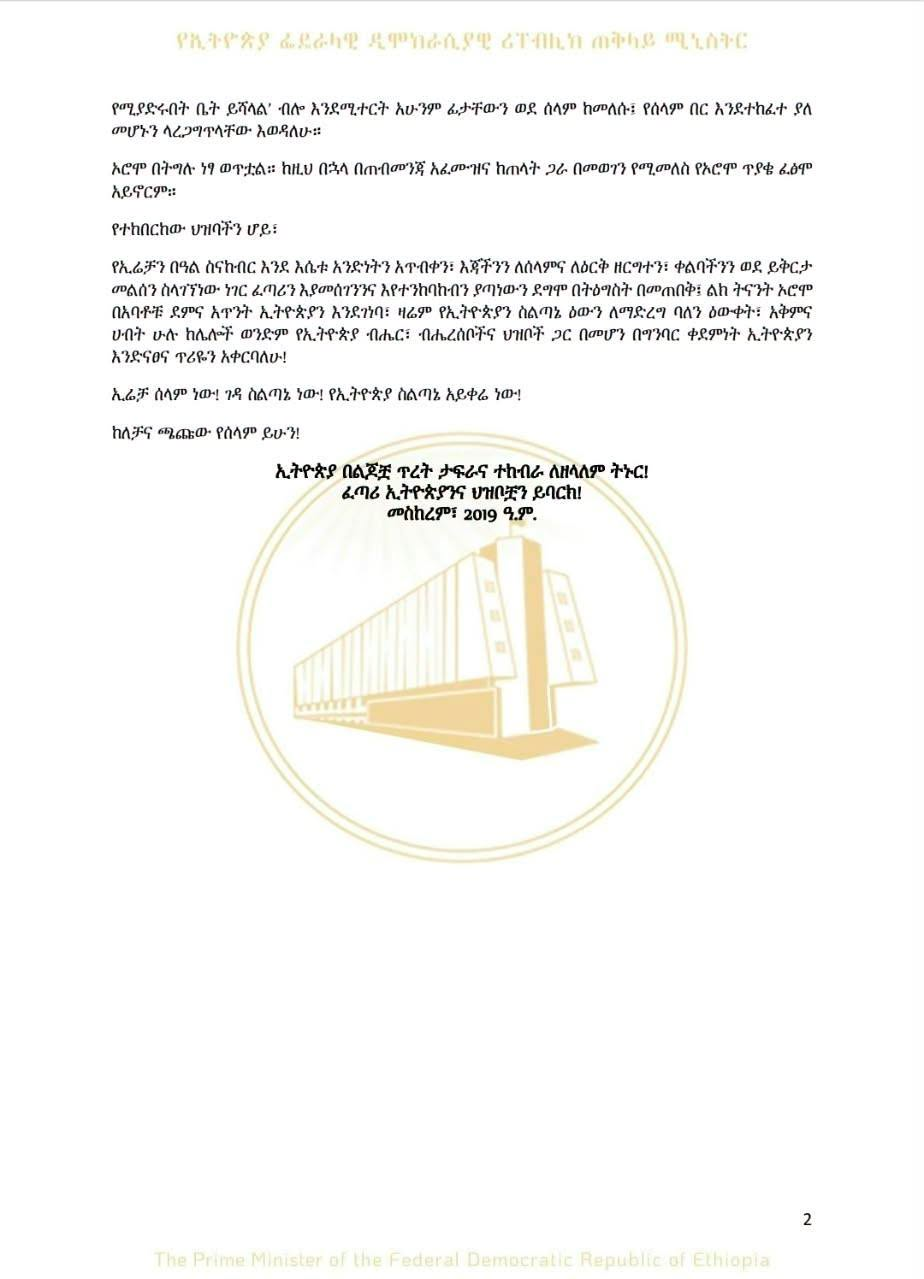
The statement, released by the Wallagga Amhara Natives Unity Association (የወለጋ አማራ ተወላጆች አንድነት ህብረት) and dated Meskerem 11, 2019 in the Ethiopian calendar (September 21, 2026), is the first organized Amhara response to the emerging WBO–Fano axis from a constituency directly affected by the conflict in Wallagga. Its language is unambiguous: any political, strategic, or tactical collaboration with the Oromo Liberation Front (OLF/ONEG) and its armed wing, commonly known as “Shene,” constitutes complicity in genocide.
The statement arrives at a critical juncture. Just one day earlier, Fano leader Zemene Kassie had announced on Tigray TV the formation of a seven-member “Alliance for Survival” alongside the WBO, the TPLF, and other armed factions, with the stated goal of removing Prime Minister Abiy Ahmed’s government. For Amharas with roots in Wallagga — a region that has witnessed some of the most brutal intercommunal violence of the past several years — the announcement was not a cause for celebration but a call to resistance.
A History of Coexistence, a Present of Atrocity
The declaration opens by invoking a shared past. For generations, it states, Amhara natives of Wallagga — in East Wallagga, West Wallagga, Horo Guduru, and Qellem Wallagga zones — lived alongside their Oromo neighbors “bound by marriage, religion, culture, and social ties, in peace and love.”
That coexistence, the group argues, has been systematically dismantled over the past few decades, and especially in recent years, by what it describes as “the radical Oromo Liberation Front (OLF/ONEG Shene) and affiliated extremist groups.”
The specific allegations are grave and detailed:
Mass killings: The statement claims that massacres in West, East, Horo Guduru, and Qellem Wallagga zones, as well as in various kebeles, were “primarily carried out by OLF/Shene and its allies,” a finding it says has been documented by human rights organizations and verified internationally.
Identity-based targeting: Victims were not killed for political or social reasons, the group asserts, but “solely because they were identified as Amhara.”
Atrocities against the vulnerable: Children, pregnant mothers, the elderly, and the infirm were not spared. The statement describes “horrific acts” in which bodies were dismembered — acts it says make any cooperation with the perpetrators “a trampling of the blood of the dead and complicity in historical injustice.”
Economic and social destruction: Thousands of farming households were burned; property, livestock, and harvests were looted. Millions were displaced from their birthplaces and forced into “roofless shelters and extreme suffering.” Schools, health stations, and places of worship were destroyed, pushing the community “entirely outside a humane way of life.”
These accounts align with broader patterns documented by international observers. The EU Agency for Asylum’s October 2025 report noted significant civilian displacement and intercommunal violence in western Oromia, though it did not attribute specific massacres to a single perpetrator. The Ethiopian Human Rights Commission has also documented widespread abuses in the region, often without clear attribution amid the fog of armed conflict.
The Wallagga Amhara group, however, places responsibility squarely on the OLF/Shene — a designation that has become increasingly common in Amhara political discourse but remains contested by Oromo advocates who argue it conflates legitimate armed resistance with criminal violence.
The Ideological Core: “The Amhara Is a Settler and an Enemy”
The statement moves beyond documenting atrocities to diagnose their root cause. It identifies the OLF’s “extremist ideology” as being built on a “false and hostile narrative” that “the Amhara is a settler and an enemy.”
This narrative, the group argues, has destroyed “the values of coexistence and peace” that bound Amhara and Oromo communities together for centuries, endangered the possibility of future generations living together, and spread a dangerous cycle of vengeance.
The charge is a familiar one in Amhara political discourse: that Oromo ethnonationalism, as expressed by the OLF and its offshoots, treats Amharas in regions like Wallagga as foreign interlopers who must be expelled or eliminated. Oromo scholars and activists have long disputed this characterization, arguing that Amhara settlement in Wallagga was historically encouraged by imperial governments and that the OLF’s primary grievance is with a centralized state, not with Amhara individuals.
Yet the Wallagga group’s testimony reflects a lived experience that cannot be dismissed as mere propaganda. For Amharas in western Oromia, the past several years have brought displacement, violence, and a pervasive sense of being targeted for their identity — a reality that shapes their reception of any political alliance involving Oromo armed groups.
A Moral Reckoning, Not Just a Political One
The statement’s fourth major argument elevates the objection from political calculation to moral principle. It condemns what it calls “the loss of political and moral principle” — the willingness to pursue political advantage “above human life, justice, and truth.”
“To ignore the lost lives of thousands, the destroyed wealth, and the tears that have flowed,” it reads, “and to cooperate with a murderous group is not to stand for justice but to become an accomplice to the crime.”
This moral framing is significant. It suggests that for the Wallagga Amhara group, the question of WBO–Fano cooperation is not merely about strategic efficacy — whether the alliance can achieve its stated goal of toppling Abiy — but about whether such cooperation is permissible at all, given the WBO’s alleged role in atrocities. The declaration positions itself as a moral red line, not a tactical objection.
It also implicitly challenges the logic of “the enemy of my enemy is my friend” that appears to underpin the “Alliance for Survival.” For the Wallagga Amhara group, the WBO is not a potential partner against a common foe but an existential threat in its own right.
Direct Warnings to Fano and Amhara Political Forces
The statement’s most consequential section is its direct message to Fano and to any Amhara political organization considering collaboration with the WBO.
“Any political organization, association, or coalition claiming to represent the Amhara people,” it warns, “must understand that any negotiation or agreement with these extremist groups is a denial of the people’s blood and bones, will find no acceptance among our people, and will be held accountable by history.”
This is not a call for dialogue. It is an ultimatum: any Amhara force that aligns with the WBO forfeits its claim to represent the Amhara people.
The warning is especially pointed given that Fano itself is not a monolithic organization. The Fano movement encompasses numerous factions with varying degrees of centralization and differing attitudes toward Oromo armed groups. Some Fano commanders in Gojjam and Gondar have focused their operations against the federal government, while those in Wallagga and northern Shawa have been directly engaged in clashes with the WBO. The Wallagga Amhara statement appears designed to strengthen the hand of Fano factions opposed to any WBO deal — and to deter those who might see tactical advantage in such an alliance.
It also implicitly criticizes any Amhara political leadership that would negotiate with the WBO without the consent of affected communities. The statement positions the Wallagga Amhara diaspora as a veto-holding constituency, asserting that its experience of violence gives it the authority to determine what Amhara political forces may and may not do.
A Call for Justice, Not Just Rejection
The declaration is not solely negative. It also lays out a positive program:
International accountability: It calls for the atrocities against Wallagga Amharas to be investigated by the International Criminal Court (ICC) and independent bodies, with perpetrators and their coordinators brought to justice.
Return and compensation: It demands that displaced Amharas be allowed to return to their lands “in peace and with full guarantees,” that they receive compensation for destroyed property, and that social services be restored — calling on both the Ethiopian government and the international community to fulfill their responsibilities.
A call to the Oromo people: In a notable gesture, the statement distinguishes between “the radical few and political merchants” and “our Oromo brothers,” urging Oromo elders, religious leaders, and youth to join in resisting “this destructive force” and to preserve “the brotherhood that has lasted for centuries.”
A call to the Amhara people and opposition forces: It urges Amhara political organizations to reject any negotiation with “these extremist groups” and warns that such deals will not be accepted by the people.
The dual appeal — rejecting Oromo armed groups while extending a hand to the Oromo people — reflects a strategic distinction common in Amhara political discourse: separating “the people” from “the armed group” and appealing to the former against the latter. Whether this distinction resonates with Oromo audiences, particularly those who view the WBO as a legitimate liberation army, is another matter.
The Broader Implications
The Wallagga Amhara statement is significant on several levels.
First, it demonstrates that the WBO–Fano alliance is not merely an elite-level arrangement but one that will face resistance from constituencies directly affected by the conflict. The Wallagga Amhara diaspora — organized, vocal, and deeply invested in the fate of their homeland — represents a significant obstacle to any durable cooperation between the two armed groups.
Second, it exposes the internal contradictions of the “Alliance for Survival.” The alliance’s stated purpose is to unite armed groups against a common enemy — Abiy’s government. But for many Amharas in Wallagga, the WBO is not a potential ally but the primary perpetrator of violence against their community. The statement effectively asks: How can Fano claim to defend Amhara interests while allying with those accused of massacring Amharas?
Third, it raises questions about the representativeness of the forces negotiating in the “Alliance for Survival.” The Wallagga Amhara group’s assertion that any deal with the WBO lacks popular legitimacy among Amharas suggests that the alliance’s architects may be speaking for themselves rather than for their claimed constituencies.
Fourth, it highlights the intractability of the underlying conflict. The statement does not merely oppose cooperation; it calls for international criminal accountability for the WBO’s alleged atrocities. This is not a position that leaves room for political negotiation. It is a demand for justice that, if pursued, would foreclose any possibility of alliance.
Fifth, it underscores the fragmentation of Amhara political representation. The Wallagga Amhara Unity Association is one of many Amhara diaspora organizations, and its positions may not reflect those of Amhara political forces elsewhere. But its willingness to directly challenge Fano’s strategic direction suggests that the Amhara political landscape is far from unified behind the “Alliance for Survival.”
Conclusion: A Line in the Blood
The Wallagga Amhara Natives Unity Association’s declaration is not a conventional political statement. It is a testimony of grief, a demand for justice, and a warning to those who would trade principle for tactical advantage.
Its core message is stark: for Amharas of Wallagga, the WBO is not a potential partner in a shared struggle against Abiy. It is the force that killed their families, burned their homes, and drove them from their lands. Any Fano leader who shakes hands with the WBO, the statement suggests, shakes hands with the blood of Wallagga’s dead.
Whether this warning will be heeded — by Fano, by other Amhara political forces, or by the architects of the “Alliance for Survival” — remains to be seen. But as Ethiopia’s armed opposition scrambles to form a united front against Addis Ababa, the Wallagga Amhara declaration is a reminder that the deepest divisions may not be between the government and its opponents, but among the opponents themselves.
“Justice for our massacred and displaced kin in Wallagga!” the statement concludes. “The true coexistence and brotherhood of our peoples will prevail!”
For now, those words read less as a prediction than as a prayer — and a warning that the road to any united opposition runs through the blood-soaked fields of western Oromia.
ADDIS ABABA — As the ink dries on the “Alliance for Survival” — the seven-member armed coalition announced on September 20, 2026, with the stated aim of toppling Prime Minister Abiy Ahmed’s government — a new and deeply consequential challenge has emerged from within Oromo legal and intellectual circles. In a searing position paper, the Oromo Lawyers Group has declared the alliance between the Oromo Liberation Army (WBO/OLA), the Fano militia, and the Tigray People’s Liberation Front (TPLF) not merely strategically unsound but a fundamental betrayal of the Oromo people’s historical struggle.
The document, titled “Why the Coalition Formed to Topple the Prosperity Government (ONEG/WBO, TPLF, Fano) Cannot Succeed: Ideological Conflicts, the Oromo People’s Painful Questions, and the Dangers Facing the Struggle,” represents one of the most systematic and unsparing critiques yet produced by an Oromo professional body against the WBO leadership’s strategic direction.
Its conclusion is unequivocal: the WBO, by allying with forces that deny Addis Ababa’s Oromo character and by negotiating in secret without popular mandate, has forfeited its claim to represent the Oromo people — and risks repeating the catastrophic mistakes of 1991.
Three Armies, Three Irreconcilable Goals
The Lawyers Group’s central analytical claim is that the WBO, Fano, and TPLF may share a common enemy, but they do not share a common cause. Their ideological foundations, historical grievances, and political objectives are not merely different but actively contradictory.
The WBO’s stated purpose, the document notes, is to assert Oromo national sovereignty and land rights — including over Addis Ababa (Finfinnee), which Oromo nationalists regard as the historic heart of Oromo territory. Yet the organization’s leadership, the paper charges, has pursued “a secretive approach” with the TPLF and Fano that is “fundamentally opposed” to this objective.
Fano, by contrast, is described as a movement built on “the old and outdated extremist view of ‘one country, one faith.'” More pointedly, the document accuses Fano of actively propagating the position that “Addis Ababa (Finfinnee) is not Oromo” and of building military capacity in Oromia — particularly in Wallagga — to advance this objective. This, the Lawyers Group asserts, has made Fano “more than 99% rejected” by the Oromo public and by Oromo political thought.
The TPLF, meanwhile, is characterized in even harsher terms. The document reminds its readers that the TPLF, despite having no border with Oromia, “came from Tigray and controlled the center of Oromia for 27 years,” during which it “killed, displaced, tortured, and looted the wealth of the Oromo people.” The TPLF knows, the paper argues, that it cannot return to Addis Ababa and reassert dominance over Oromos due to its historical crimes. Its strategy, therefore, is to use the WBO “as a ladder” — a vehicle to return to power and resume economic exploitation.
The implication is stark: the WBO is not a partner in this alliance but a tool. And the Oromo people, the document insists, “clearly understand this.”
The Internal Dangers: Division and Illegitimacy
The Lawyers Group warns that the alliance has already created “high internal danger” within the WBO. Members who oppose the leadership’s secretive approach, it argues, may follow the path seen during the TPLF’s internal splits — abandoning the struggle or surrendering to the government. The document frames this not as a hypothetical risk but as an unfolding process.
More fundamentally, it contends that the Oromo people’s rejection of the alliance is overwhelming — “more than 95%” — and that a military effort lacking popular base and acceptance is doomed to ultimate failure.
This claim of near-universal Oromo rejection cannot be independently verified. Oromo public opinion is neither monolithic nor easily measurable under current conditions. But the Lawyers Group’s assertion reflects a broader sentiment that has surfaced repeatedly in Oromo diaspora discourse since the alliance was announced: that the WBO’s leadership has acted without consulting the very population it claims to represent.
“Trampling the Blood of Martyrs”
The document’s most emotionally charged section addresses what it calls “the betrayal of blood and sacrifice.”
It invokes the thousands of Oromo youth — the Qeerroo generation — who, it says, “shed their blood and broke their bones” for the cause of making Addis Ababa the “heartland of the Oromo people.” To now ally with forces that say “Addis Ababa is not Oromo” and attempt to enter the capital alongside them, the Lawyers Group argues, is “to trample the blood of those martyrs and to render their lives meaningless.”
The document further charges that the alliance “reopens the wounds of history” by embracing the TPLF — the same force that, for 27 years, “persecuted, killed, displaced, and looted” Oromos — and paving its way back to Addis Ababa. This, it says, inflicts “another indelible wound on the hearts of Oromo mothers.”
And it accuses the WBO leadership of preparing to “surrender the Oromo people’s historical rights” — national self-determination, cultural autonomy, and land ownership — in exchange for the promise of “power first,” negotiated with “extremist Fano forces.”
Unanswered Questions at the Heart of the Alliance
The Lawyers Group identifies what it considers the fatal flaw in the “Alliance for Survival”: the absence of any agreement on the most fundamental questions of political transition.
If the Prosperity government falls, the document asks, how will power be divided in the transitional government? What system of governance will be established? Who will lead the transition? And what will be the fate and ownership of Addis Ababa?
“To say, without answering these fundamental questions and without signing a clear agreement, that ‘after we topple the regime, the people will decide,'” the document states, “is to deceive the people.”
This is a direct challenge to statements reportedly made by WBO commander Jaal Marroo and other spokespeople, who have suggested that the post-Abiy political order will be determined by the people. The Lawyers Group argues that history — specifically, the experience of 1991 — demonstrates precisely the opposite: that the force controlling Addis Ababa after a regime’s collapse determines the transition, not the public.
The Lessons of 1991
The document’s historical section is its most pointed warning.
In 1991, when the Derg regime fell and a transitional government was formed, “it was not the people who decided everything, but the TPLF, which controlled Addis Ababa.” The TPLF, the Lawyers Group reminds its readers, “controlled the transitional government and imposed its will on the people by force.”
The implication for today is unmistakable: if the WBO, Fano, and TPLF succeed in toppling Abiy and enter Addis Ababa together, the post-conflict order will not be determined by the Oromo people — it will be determined by whichever armed force controls the capital. And given the TPLF’s historical dominance and Fano’s hostility to Oromo claims on Addis Ababa, the Oromo people are likely to find themselves once again marginalized, if not actively repressed.
The document calls the WBO’s promise of post-collapse popular sovereignty “100% false” — a deliberate deception designed to pacify a population that would otherwise reject the alliance outright.
The Oromo People’s Painful Questions
Perhaps the most powerful section of the Lawyers Group’s paper is its catalog of questions that it says the Oromo people are asking — questions that the WBO leadership has not answered.
First, why did the WBO reject peace talks? The document notes that when a group of Oromo lawyers and intellectuals proposed negotiations with the government, and the government expressed willingness to talk, it was the WBO that rejected dialogue and reconciliation. “The people are asking you every day,” the paper states, “‘Solve your political problem with the regime through peace and negotiation.’ Why did you choose to ally with Fano and TPLF — forces that are not the desire or purpose of the Oromo people — instead of accepting reconciliation when the government was ready to talk?”
Second, why the secrecy and deception? The WBO, the document notes, has publicly denied relations with the Tigray diaspora/TPLF while simultaneously acknowledging relations with domestic armed forces. “How can you form a military alliance with these forces without a written, verified agreement signed before trustworthy and neutral observers?” the paper asks. “Why have you not fulfilled your leadership duty to inform the people?”
Third, who will lead the transitional government? “When you negotiated with these forces,” the document asks, “did you agree on who — which person or entity — will lead the transitional government if the current system falls? Or did you leave this critical issue to be decided after the collapse?”
Fourth, what if 1991 repeats itself? The document poses a series of hypothetical but historically grounded scenarios: If these forces — the same TPLF that conspired with Eritrean forces against the OLF in 1991 — repeat that conspiracy and attack you, what will you do? If, after seizing the center of power, they declare “one country” and “Addis Ababa is not Oromo” and open war against you, will you return to the bush and continue the struggle, or will you abandon it and go home? Or will you open a civil war within Addis Ababa and violently confront the transitional government?
Fifth, why was a written agreement not signed in advance? “If you say, ‘We will form an alliance and topple the regime,’ why did you initiate military activity without signing and publicizing this alliance on paper, before witnesses?”
Sixth, why deceive the people with false promises? “History — the 1991 experience — clearly shows that when a regime falls, it is not the people who seize power, but the military group with weapons in hand. Why, then, was it necessary to deceive and confuse the people with the false promise that ‘after the regime’s collapse, the people will decide’?”
The Demand: Transparency, Apology, Withdrawal
The Lawyers Group does not merely criticize. It issues a set of urgent demands to the WBO leadership.
First, if a clear agreement with these forces has already been signed, it must be fully disclosed to the Oromo people and their representatives.
Second, if the WBO entered this alliance without such an agreement — “out of emotion and conspiracy” — its leaders must appear in public media and apologize to the Oromo people.
Third, the WBO must urgently withdraw from the alliance and clearly restate its position on Addis Ababa and Oromo historical rights.
The document concludes with a warning: “Any secret effort with Fano and TPLF, without a clear agreement on the historical rights of Addis Ababa and Oromia — the very cause for which thousands of Oromo youth have laid down their lives — has reduced the WBO’s credibility and acceptance among the Oromo people to zero. The current approach risks surrendering the Oromo struggle to others. If the position is not corrected, it will be held accountable by history and by the people.”
The Broader Reckoning
The Oromo Lawyers Group’s intervention is significant not only for what it says but for who is saying it. This is not a statement from a rival armed faction or a diaspora opposition group with its own organizational agenda. It is a position paper from a professional body — lawyers, presumably with training in evidence, argumentation, and legal accountability — applying those skills to the WBO’s political strategy.
Its critique is comprehensive: ideological, historical, strategic, and moral. It challenges not just the wisdom of the alliance but its legitimacy. And it does so in the name of the Oromo people — a people the document insists have been neither consulted nor convinced.
The paper also implicitly raises a question that will haunt the WBO long after the current alliance’s fate is decided: What is the relationship between an armed organization and the population it claims to represent? If the WBO can enter a military alliance with forces that deny Oromo claims to Addis Ababa — the central symbolic and territorial demand of the Oromo struggle — without popular mandate, what does “Oromo liberation” actually mean?
For now, the “Alliance for Survival” remains intact on paper. But the Oromo Lawyers Group’s intervention suggests that its real battle may not be against Abiy’s government, but against the skepticism, alienation, and outright opposition of the very people it claims to be fighting for.
The WBO has not yet responded publicly to the Lawyers Group’s demands. Whether it will — and how — may determine whether the alliance becomes a turning point in the Oromo struggle or the moment it began to unravel.
A Strong Statement Against Ongoing Atrocities Targeting Oromo Communities in Western Oromia
By Oromian News Agency
(ONA, August 23, 2026) The Gamtaa Qeerroo Dargaggoota Oromoo (GQDO) —also known as the Oromo Youth (Qeerroo) Union (OYQU) —issued a powerful and urgent statement demanding immediate action to protect civilians in Oromia. The union has labeled the Fano Ximdoo group as a terrorist organization, holding it responsible for a series of escalating attacks against innocent Oromo communities, particularly in the East and Horro Guduru Wallagga zones.
The GQDO’s statement serves as a stark warning: “Attacks targeting civilians, the looting and destruction of property, and the use of force to spread fear are acts of terrorism” . The union declared that the Fano Ximdoo group is “unequivocally a terrorist group” and called on the federal and regional governments to take decisive legal action to dismantle it and bring its perpetrators to justice.
The Escalating Crisis in Wallagga
The statement points to a disturbing pattern of violence. According to the GQDO, Fano Ximdoo and allied armed groups have been systematically targeting civilians in the East Wallagga and Horro Guduru Wallagga zones. The union highlighted the massacre of innocent civilians on August 19, 2026, in the Gida Ayana district, specifically in areas like Angar Guttee, Kiramu, and Ebantu. The attacks involved “the killing of civilians, the looting and burning of businesses and other property, the looting of banks and other civilian institutions, and the targeting of bank employees and officials, some of whom were killed” .
This is not an isolated incident but part of a broader, ongoing campaign of terror. The GQDO noted that “similar attacks have been repeatedly committed against our people in these areas, and they continue to occur” . The attacks are designed to “spread fear and chaos within society” and are “unacceptable and cannot be ignored” .
A Terrorist Structure with Foreign Ties
The GQDO’s statement goes further, claiming that Fano Ximdoo is not a spontaneous or localized militia but part of an organized network with significant foreign backing. They point to reports of a meeting in Port Sudan in June 2026, where the group allegedly coordinated with the Tigray People’s Liberation Front (TPLF) and other armed factions to expand its operations, particularly in western Oromia.
The GQDO also accused Eritrea, Sudan, and Egypt of involvement, alleging that these nations are “playing a facilitating role” in the group’s operations and “cooperating with the group.” The union argued that such foreign involvement is a “violation of Ethiopia’s sovereignty” and poses a serious threat to its stability .
A Call to Action: Protect Civilians and Deliver Justice
The GQDO’s message is unequivocal: the federal and regional governments must act now. They have demanded that the government “should give special attention to the issue of Fano Ximdoo and groups affiliated with it to provide protection to the people in the affected regions” . The union has also called for the government to “take legal steps to bring those responsible for these crimes to justice.”
The group emphasized that “civilians who are being harmed must not be forgotten” and that all Ethiopian institutions must “work to bring peace and security to the Oromo people” . In a powerful declaration, the union stated: “We will stand with our people who are being harmed. We will not be deterred by anyone.”
Key Demands of the GQDO:
Immediate Protection: Provide immediate security and protection to civilians in the affected zones, especially in East Wallagga and Horro Guduru Wallagga.
Justice and Accountability: Identify and bring all perpetrators of the attacks to justice in accordance with Ethiopian law.
Designate as Terrorist: Officially designate Fano Ximdoo and its affiliates as a terrorist organization under Ethiopian law.
Investigate Foreign Links: Investigate and hold accountable all foreign actors and networks supporting these groups.
Community Support: Provide urgent humanitarian and psychological support to affected families and communities.
Stop Media Propaganda: Condemn media outlets and social media users who glorify these acts of terrorism or spread propaganda that fuels the violence.
Conclusion: A People Will Not Be Silenced
The GQDO’s statement is a testament to the resilience and determination of the Oromo people in the face of brutality. It is a demand for justice, a call for protection, and a refusal to accept the normalization of violence against civilians.
As the union declared: “Attacking civilians is terrorism.” The Oromo Youth Union has drawn a clear line in the sand, warning that “the lives of innocent civilians who are being killed must be protected, and the perpetrators of these crimes must face justice.”
The message from the Qeerroo is clear: the violence must stop, and those responsible will be held accountable.
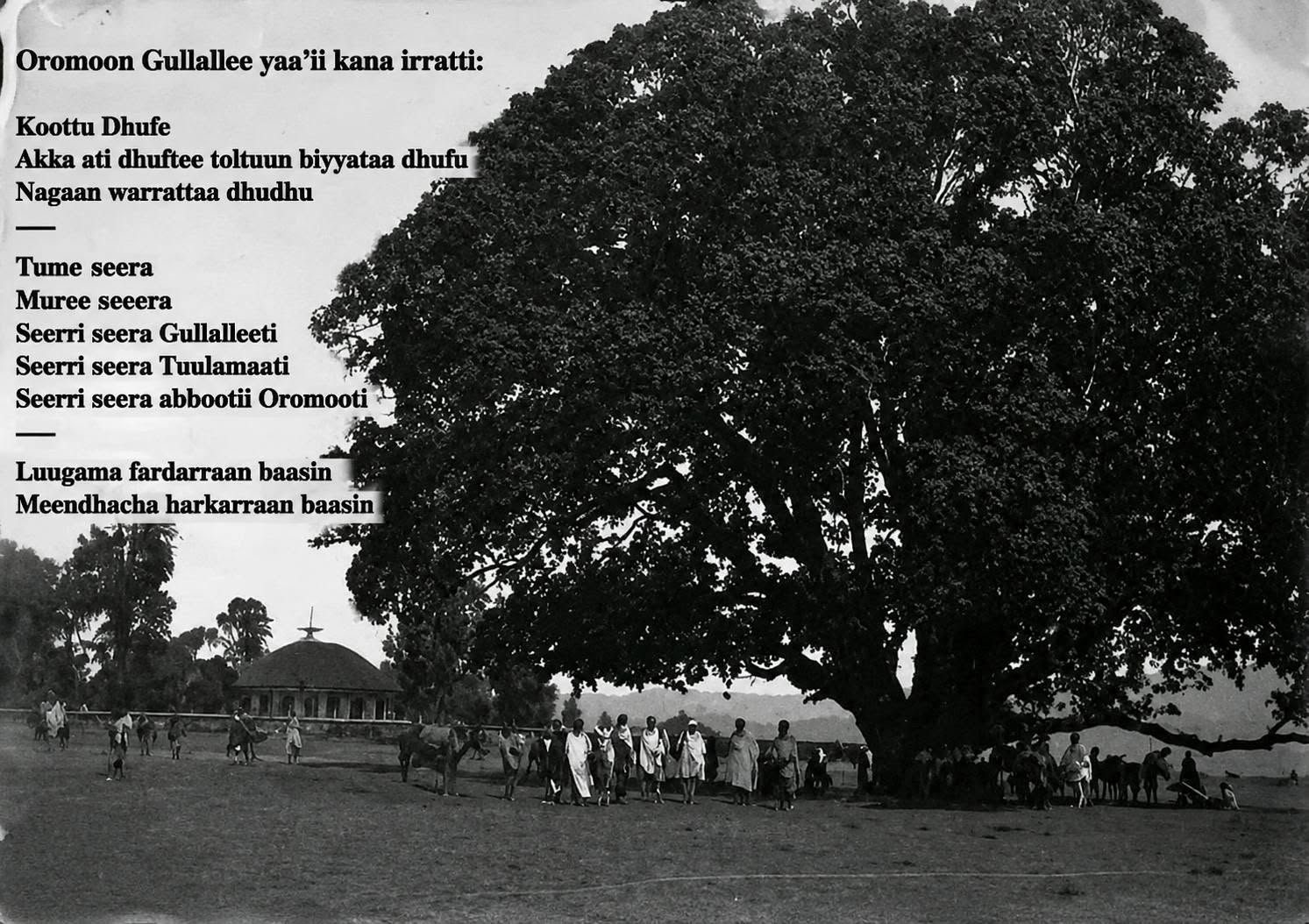
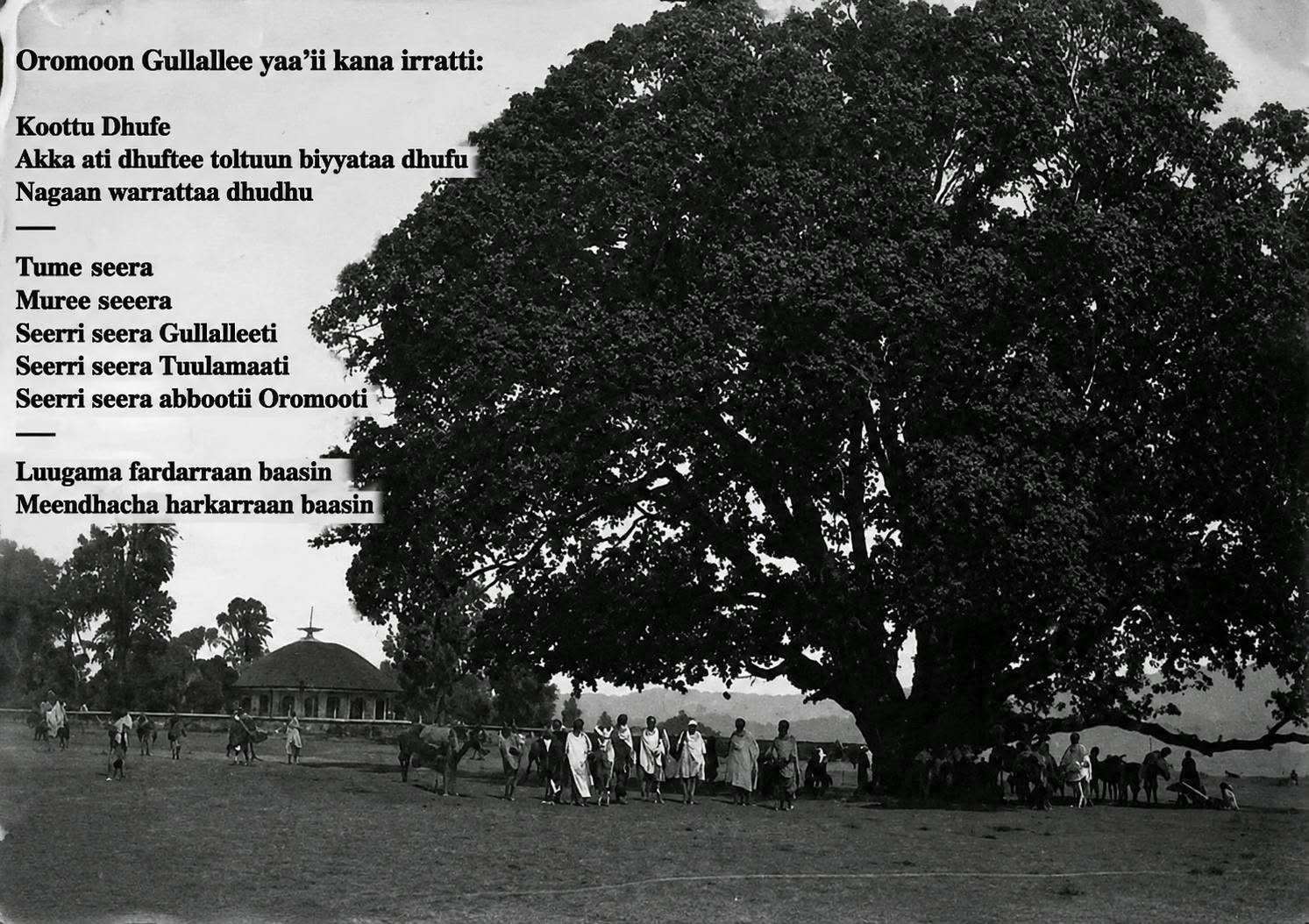
Seenaan Oromoo Gullallee akkuma seenaa Oromoota kaanii nama gaddisiisa, nama boochisa, haaridhaan ilkaan nama ciniinnachiisee, xiiqii garaa nama kaayee, booree baafachuuf, jechuun biyya ofii deebisanii harkatti galfachuuf nama kakkaasa. Kanaafuu, nama boochisas nama boonsisasi!
Raasaa kana (jidduu kana) namoonni keenya tokko tokko waayee dhuma kanaa irratti yaada ciccimaa fi barreeffama (material) kana irratti argatan nuu dabarsaniiti jiru. Keessumaayyuu barreeffamni karaa Dr. Makuraa Bulchaa argame gammachiisaa dha. Waraqata isaa kana otoo namoonni yeroo qaban gara afaan Oromootti hiikanii, akkuma inni jedhe karaa beektaniin warra biyyaatii ergamee hedduu gaarii dha. Har’a ijoolleen Oromoo kan miliyoonaan lakkaawamantu dheebuu barreeffatoota afaan keenyaan bayanii qabu.
Gabaasa Seenaa
Amma ennaa warraaqaa jiran kana immoo kan akkanaa, kan namni oggaa warri Minilik biyya keenya gubu, nama keenya gorra’u, dachee barbadeessee loonillee gadoochuu wajjin deemee, argee barreesse kana argata! niitoo dubbisan baay’ee isaan gargaara.
Waan hundaafuu, akkuma obboleessi keenya kun jedhe, nuti “lamenting” guddifnee jirraa, mee kana dhiifnee karaa biyyaas karaa alaas warraaqnee, uummata keenya isa itti duulamaa jiru maddii ijaajjineetoo, haa sochoonu! Nuti hunduu akka kanaan duraatti qabsoo bilisummaa saba keenyaa adeemsisuu akka hin dandeenye, daran beekuu qabna.
Addunyaa geeddaramte tana keessatti nutis geeddaramuu qabna. Akkuma Dr. Asaffaa Jaalataa sirriitti kaaye, “the politics of common sense”-n bilisummaa keenya gonfachuu hin dandeenyu. Dammaqiinsa sabaa, Oromummaa, kan ammaa caala gabbifnee, tokkummaa ijaarsota keenya isa bu’ureeffame (ULFO) sirriitti cimsineetoo, qabsoo sirriitti ijaaramee qindeeffame adeemsisuun dirqama. Dirqama kana tahu waan karaan biraa hin jirreefi.
Hunduu akkanumatti harqoota koloneeffattootaa caccabsee of irraa darbate. Nutis harqoota kononeeffattoota Abas haa akkanumtti hurreessinee darbachuu qabna. Yoo akka kanaa olitti ibsame goone qofa, jara meeshaa waraanaa isa ammayyaa hidhatee nuttu duule, hammas ittuma fufee nutti duulaa jiru kana, kan of irraa faccisuu dandeenyu.
Shaggar-Finfinnee fi Oromoon Naannoo Isaa
Seenaan Shaggar-Finfinnee seenaa Oromoota isa marsanii jiran, keessumaayyuu seenaa Oromoo Gullallee wajjin walqabata. Oromoonni Shaggar marsanii jiran: Gullallee, Eekkaa, Galaan, Sulutaa fi Meettaa Aabbuu ti. Kana keessa Gullallee fi Eekkaan Shaggar keessas jiraatuyyu, jechuun akka biyya lammiin tokko irra jiruutti. Hammas isaan lafa irraa duguuganee fuxuun, koloneeffattoota keenyyaa hin taane, akka gurmee fi namtokkeettis Shaggar keessa ni jiraatu.
Dabaleesoo, kan buqqa’us kan bakka isaa buqqa’ee qubatus uummatuma tokko. Keenya garuu, kan buqqa’u ganda Oromoo ti; kan dhufee achi qubatu warra Abashaa ti. Gandi Oromoo tokko oggaa buqqa’u, aadaa fi seenaa Oromootu wajjin buqqa’a.
Silaa Shaggar dalgamalee, ol hin ijaaramu, manni dhoqqee Buraayyuu irraa kaasee Aqaaqii Basaqaa gayee jira. Kun immoo baatii baatiin Oromoo naannoo kanaa irratti raawwatamaa jira. Gullalleen fi Eekkaan buqqifama durattii irraa hafee, kunoo amma ijuma keenya duratti buqqifamaa jira. Kanas Oromoonni kun tole jedhanii hin fudhanne. Gara waggaa torbaatii kaasee ofi irraa faccisaati jiru. Ammoo kan isaan dhagawu, kan isanii birmatu, kan waayee kanaa illee addunyaa dhageessiseef hin jiru.
Uummanni kun waldaa gandaatiin ijaaramee, yaa’ii ofii irratti murtii dabarsee, mana marii Shaggar dura dhaabatee jira. Garuu, manni marii Shaggar kunis foolisii itti duulchisee isaan buqqiseeti jira. Kuni Oromoota Naannoo Buraayyuu (Gullallee), naannoo Garjii (Eekkaa), naannoo Boolee fi Laaftoo (Gullallee!) fa irratti raawwatamee jira. Ammallee ittima fufeetoo jira.
Kun cufti yommuu tahu, warri OPDO isaan hin gargaarre. Ilaa gandeen kun kan turan gariin hammas kan jiran “Bulchiinsa Shaggar” jala otoo hin tayin, Oromiyaa jala. Oromiyaan warra OPDO immoo, Oromiyaa uummata ofiitii dhaabattu otoo hin taane, Oromiyaa kophee koloneeffattootaa fi maxxantoota isaanii jala jirtuu ti.
Warri Amaaraa Shaggar yeroo duraa karaa mara hammaa kiilomeetira 50-tti babaldhisuuf, kan karoora baafatan jabana Darguu ti. Karaa hundaa kiilomeetira 50 jechuun: karaa Salaalee magaalaa Caancoo fi Sulultaa dabree hamma laga Dubar-itti, karaa Amboo hamma Ijeree (“Addis Alam”)-tti, karaa Walisoo hamma Tajiitti, karaa Sooddooo hamma Malkaa Qunxureetti, karaa Adaamaa hamma Bishooftuutti, karaa Abbichuu hamma Bakeetti.
Kuni sagantaa isanii isa duraati malee, booda babaldhisani “mootummaa naannoo Addis Ababa” jedhaniitoo, Shaggar-Finfinnee biyya Amaaraa isa Manjee (Manz) wajjin walqabsiisuufi. Ammaa egaa, oftuultonni Amaaraa isa bara Darguu galmee keessaa baasanii Wayyaaneetti kennaa jiru. Mallasis warra Amaaraa ofitti harkisuuf, dabalees fedhii warra isaatii eeguuf, kana haaromsee itti ka’e.
Ka’iisa Oromoo Gullallee Bara 1878
Oromoon Gullallee bara dheeraa waraanaa mootummaa Abashaa of irraa faccisaa ture. Isa xixxiqaa yoo dhiifne yeroo lama, waraana isatti duule of irraa deebisee jira. Ammoo dubbiin meeshaa waraanaa isa ammayyaa irratti kan hundaaye, waan tayeef, waraana isa sadaffaa irratti moyame.
Sana dura Goobana Daccee Minilik wajjin dhaabatee, erga Oromoo Abbichuu, Jirruu fi Galaan faa cabse, Oromoota Tuulamaa fi Maccaatti jaarsa ergee, akka Minilik dura hin dhaabanne gochuuf yaale. Kan inni jedhus: nuti fi warri Sidaamaa bara dheeraa wallollee, wal-madeessinee jirra. Isaan amma qawwee argatanii nuti garuu, homaa of harkaa hin qabnu. Nutumtuu gosa gosaan wallolaa jirra.
Kanaa mannaa koottaa nuti tokkummaa Oromoo dhaabaneeti, isaan wajjinis nagaan fi walqixxummaan jiraannaa! Ammoo durreewwan Oromoo baay’een tokkummaa Oromoo inni kaase, yoo jaalatan illee isa Amaara wajjin taana jedhu hin jaalanne. Isas amanuu hin dandeenye. Booda Oromoonni “yoo tokkummaa Oromoo feete kophaa kee koottu! Diina harkiftee nutti hin dhufini. Yoo isaan wajjin dhuftee, isaan jala nu galchuu barbaadde, nuti si dura dhaabanna.”, jedhaniini.
Innis gorsa isaanii hin dhageenye; isaanis dhaamsa isaa hin fudhanne. Warri Minilik in dhufu, Oromoon immoo of irraa deebisa. Kuni waggaa baay’ee fudhate. Minilik inni Oromoo Abbichuu bara 1868 keessa qabate, Oromiyaa guutuu qabachuuf waggaa 31 irraa fudhate. Kunis inni dhumaa Oromoo Booranaa isa bara 1899 qabatame.
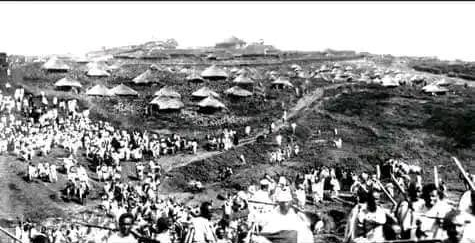
Waraanni Minilik inni yeroo lama Oromoo Gullalleetin moyame, isa sadaffaa irratti akkaan hidhatee itti dhufe. Gullalleen waraanaa dhufaa jiru dhageyee, yaa’ii waame. Yaa’iin kun waltajjii Shaggar bakka yaa’iin isaanii durattumaa itti tahu, Tulluu Daalattii irratti. Bakki kun iddoo booda Minilik masaraa itti ijaarratee, “masaraa guddicha” jedhen, bakka amma Mallas Zenaa jiraatu. Yaa’iin seena-qabeessi kun guyyaa guutuu walmariyachaa oolee, booda sagalee tokkoon waraarana Minilik dura dhaabachuuf murtee dabarse. Murtee yaa’ii kanaa E. Cerulli: The folk-Literature of the Galla of Southern Abssinia: Cambridge, 1922, keessatti barreeffamee jira.
A Crisis of Violence, Displacement, and Broken Peace Efforts
By Our Senior Correspondent
The Oromia region, Ethiopia’s most populous state and the heartland of the Oromo people, continues to be ravaged by a protracted and brutal conflict between the federal government and the Oromo Liberation Army (OLA). Since the group split from the Oromo Liberation Front (OLF) in 2018 and took up arms, the region has been mired in a cycle of violence that shows no signs of abating .
What began as an insurgency has evolved into a complex security crisis characterized by widespread human rights abuses, mass displacement, and failed peace initiatives. As the conflict grinds on, civilians are bearing the heaviest burden, caught between government forces and an increasingly emboldened rebel army.
The Human Cost: Atrocities on Both Sides
The conflict in Oromia has been marked by shocking violence against civilians. According to a 2026 Amnesty International report, both the OLA and government forces have been implicated in grave human rights violations . The report documented multiple instances of conflict-related sexual violence (CRSV), including gang rape and sexual slavery, perpetrated against women and girls in Oromia .
In one documented case, a 12-year-old survivor described being raped twice daily for an extended period . Another survivor recounted being subjected to sexual abuse for three weeks alongside her child . The report highlighted that women with family members in government forces were explicitly targeted as reprisals by OLA fighters, with attacks lasting days or even weeks carried out by armed actors in rotation .
Amnesty International concluded that these “repeated abuses are not only horrific but may amount to war crimes” .
The Casualty Count: A Toll on Civilians
The violence has also resulted in significant civilian casualties. In June 2026, attacks in the Arsi Zone, specifically in the Aseko area, left dozens of civilians dead . A medical worker reported counting 56 dead and 50 wounded from attacks on multiple localities between May 31 and June 3 . Witnesses described OLA militants “using their rifles to hunt and kill residents” .
The Ethiopian Human Rights Commission (EHRC) linked the OLA to deadly attacks in East Arsi Zone, which resulted in civilian deaths, large-scale displacement, and widespread destruction of property, including the burning of a church and damage to a mosque . However, the OLA has consistently denied involvement, accusing authorities of orchestrating communal tensions and attempting to shift responsibility for the violence .
Failed Peace Efforts
Despite multiple attempts to resolve the conflict through dialogue, peace remains elusive. In April 2026, talks between the government and the OLA in Dar es Salaam ended without agreement . Prime Minister Abiy Ahmed’s national security adviser attributed the failure to “the obstructive approach and unrealistic demands of the other party” . The OLA, in turn, accused the government of being “only interested in co-optation of the leadership of the OLA rather than beginning to address the fundamental problems” underlying Ethiopia’s security and political challenges .
The breakdown of talks has perpetuated the cycle of violence, with both sides accusing each other of bad faith. The OLA had expressed its determination to achieve a “peaceful political settlement,” but the gap between the two parties has proven unbridgeable .
The Fragmented Peace: Surrenders and Splits
The government has pursued a dual-track approach: encouraging fighters to lay down arms while continuing military operations against those who reject peace calls . In December 2024, the Oromia regional government signed a peace agreement with a faction that split from the OLA, led by former central zone commander Yadessa Negassa . More than 800 fighters reportedly surrendered, and several former OLA figures were appointed to senior government positions .
However, the main OLA faction, led by Kumsa Diriba (also known as Jaal Maroo), dismissed the signatories as individuals who had been expelled months earlier over disciplinary issues . The OLA has continued to attack those who surrendered, with the Oromia Peace and Security Bureau alleging that the group targets former fighters who have returned to civilian life .
Expanding Conflict: Coordination with Other Armed Groups
The security situation in Oromia has been further complicated by reports of coordination between the OLA and other armed groups. In June 2026, the Ethiopian National Defense Force (ENDF) claimed that the OLA and Fano fighters coordinated an attempted attack in East Wollega Zone . While the ENDF said the “operation was completely foiled,” the claim suggests a growing convergence of anti-government forces .
The OLA’s strength, estimated at a few thousand in 2018, has grown significantly in recent years, though observers believe it remains insufficiently organized to pose a serious threat to the federal government . Nevertheless, the group has carried out multiple deadly attacks, contributing to widespread insecurity and instability .
Conclusion: A Region in Crisis
The conflict between the Ethiopian government and the OLA has exacted a devastating toll on the people of Oromia. Civilians have been subjected to sexual violence, summary killings, torture, and mass displacement . The conflict has also exacerbated ethnic tensions, particularly between Oromos and Amharas, with retaliatory attacks leading to further bloodshed .
Efforts to bring the conflict to an end through peace talks have failed, and the government’s strategy of co-opting splinter factions has done little to weaken the main OLA insurgency. As the violence continues, the humanitarian crisis in Oromia deepens, with millions of children out of school and health facilities damaged or destroyed .
The international community has largely remained silent, but as Amnesty International has noted, “when sexual violence amid conflict is not acknowledged or prosecuted, it enables more violence and abuse” . Without a genuine commitment to addressing the root causes of the conflict—marginalization, political exclusion, and historical grievances—the cycle of violence in Oromia is likely to continue.
This feature article is dedicated to the people of Oromia who continue to suffer the consequences of this devastating conflict.
Residents Report Compulsory Recruitment in Sheger, East Hararghe, and East Bale Zones
By Oromia News Agency
(ONA, Finfinne, 14 August 2026)-As Ethiopia grapples with escalating security tensions across multiple regions, reports have emerged of a resurgence of forced military conscription in various parts of Oromia. Residents from the Sheger City area surrounding Finfinne (Addis Ababa), as well as the East Hararghe and East Bale zones, have described a renewed campaign of compulsory recruitment that is instilling fear and uncertainty in communities already strained by conflict.
According to eyewitness accounts, young men are being taken against their will by security forces, while in some cases, families have been ordered to pay money for their sons’ release from forced military service.
The Recruitment Campaign
Residents from the Sheger City area, which encircles the capital, have reported that military recruiters have been conducting door-to-door operations, rounding up young men without prior notice or consent. In many instances, those taken are not given the opportunity to object or appeal.
“Youths are being loaded onto trucks and taken away without any explanation,” one resident told Oromia News Agency, speaking on condition of anonymity. “They do not ask whether you are willing to serve. They just come and take you.”
In some areas, families have allegedly been given a choice: pay a “release fee” to have their sons returned, or accept that they will be conscripted into military service. The exact amounts being demanded remain unclear, but residents have expressed outrage at the practice, which they describe as extortion.
East Hararghe and East Bale: Expanding Operations
The forced recruitment is not confined to the capital’s periphery. Reports from East Hararghe Zone and East Bale Zone indicate that conscription operations are also underway in these areas. Witnesses have described a similar pattern: security forces arriving in villages, taking young men, and transporting them to undisclosed military training camps.
“The government says it needs soldiers to protect the country,” a local elder from East Hararghe said. “But why are they taking our children by force? Why not give them a choice? We are already suffering from the conflict. This only makes things worse.”
The renewed conscription comes at a time when Ethiopia’s security situation has become increasingly fragile, with multiple regions experiencing violence and instability.
A Nation in Crisis
The resurgence of forced military recruitment is unfolding against a backdrop of deepening security challenges across the country. The crisis is multi-faceted, with several distinct conflicts and tensions converging:
1. Renewed Tensions Between the Federal Government and Tigray (TPLF)
After years of devastating war and a fragile peace agreement, relations between the federal government and the Tigray People’s Liberation Front (TPLF) have once again soured. The two sides have exchanged accusations of violations, and tensions in the northern region are rising. The prospect of renewed conflict has forced the federal government to bolster its military capacity, contributing to the demand for fresh recruits.
2. Ongoing Conflict in the Amhara Region
The Amhara region remains engulfed in an armed confrontation between federal forces and the Fano militia. The conflict, rooted in disputes over territorial control, political representation, and the federal structure, has led to widespread displacement and human rights concerns. The continued fighting has drained military resources, further driving the need for personnel.
3. Instability in the Benishangul-Gumuz Region
The Benishangul-Gumuz region continues to experience instability, with armed groups and ethnic tensions threatening the safety of local populations. The region’s proximity to the Ethiopian-Sudanese border and its strategic importance have made it a focal point of military operations.
4. The Unrelenting OLA Conflict
The conflict between the federal government and the Oromo Liberation Army (OLA) continues unabated. In June 2026, attacks in the Arsi Zone, specifically in the Aseko area, left dozens of civilians dead. The Ethiopian Human Rights Commission (EHRC) linked the OLA to the attacks, reporting civilian deaths, displacement, the burning of a church, and damage to a mosque. The OLA has consistently denied involvement, accusing authorities of orchestrating communal tensions and attempting to shift responsibility for the violence
Experts Warn of Long-Term Consequences
Analysts and security experts who spoke to Oromia News Agency have expressed deep concern over the resurgence of forced conscription. They argue that compelling young people to fight, especially against their will, is not only a violation of fundamental human rights but also a strategy that is unlikely to succeed.
“Forcing young people into war is a sign of desperation, not strength,” said one analyst. “When soldiers are unwilling, they are less effective, less disciplined, and more likely to desert. This approach will not resolve Ethiopia’s security challenges—it will only deepen the trauma and resentment felt by communities.”
Experts also warn that forced conscription in Oromia could exacerbate the already tense relationship between the federal government and the Oromo people. Many Oromos view the Ethiopian state with suspicion, seeing its military operations as instruments of oppression rather than protection. Compulsory recruitment is likely to reinforce that perception and fuel further resistance.
A Call for Alternatives
While acknowledging the need for national defense, civil society groups and human rights advocates have called for a more transparent and voluntary approach to military recruitment. They argue that the state should invest in professionalizing the military, improving pay and conditions, and offering incentives for voluntary service.
“Force is not the answer,” said a human rights advocate. “The government should engage communities, build trust, and create opportunities for young people to serve their country voluntarily. Forcing them into uniform only creates more enemies than it creates soldiers.”
The Human Cost
Behind the political and strategic calculations are real human stories. Families across Oromia are living in fear—fear of losing their sons to a war they do not understand, fear of being forced to pay bribes to secure their children’s release, and fear of the long-term consequences of being associated with the military.
One mother from the Sheger area described her anguish: “My son is 19 years old. He was taken last week. We have not heard from him since. We do not know where he is or if he is alive. They told us to pay money, but we do not have it. What are we supposed to do?”
Conclusion: A Dangerous Path
The resurgence of forced military conscription in Oromia is a troubling development that reflects the deepening crisis facing Ethiopia. As the country navigates a complex web of conflicts, the temptation to resort to coercive measures is understandable but dangerous.
For Ethiopia’s young people—and for the nation’s future—the path of forced recruitment is a dead end. It undermines the legitimacy of the state, deepens communal grievances, and fails to build the cohesive and motivated military force needed to secure the country’s long-term peace.
The government must listen to the voices of the affected communities and pursue alternatives that respect human dignity and build trust. Without such a shift, the cycle of conflict and suffering is likely to continue.
How Active, Adaptive, and Agenda-Setting Engagement Is Reshaping Ethiopia’s Global Standing
By Oromia News Agency
In a world of rapid geopolitical shifts and emerging multipolar dynamics, Ethiopia is charting a bold and distinctive foreign policy course. Prime Minister Abiy Ahmed (PhD) has outlined a clear vision for the nation’s international engagement, anchored in what can be described as four fundamental pillars of Medemer diplomacy—a philosophy of synergy, collaboration, and proactive engagement .
As Africa’s second most populous nation and host of the African Union headquarters, Ethiopia is leveraging its strategic position to move from being a passive observer of global events to an active agenda-setter on the world stage . The four principles guiding this transformation are Active Diplomacy, Alternative Partnership Networks, Adaptive Diplomacy, and Agenda-Setting Diplomacy.
1. Active Diplomacy: Engagement Over Isolation
The first principle, Active Diplomacy, reflects Ethiopia’s commitment to being a proactive participant in global affairs rather than a bystander. Prime Minister Abiy has emphasized that in an era of rapid international change, Ethiopia cannot afford to remain passive . The nation must instead be an engaged, dynamic, and agenda-setting actor on the world stage.
This active approach draws from the broader “Medemer” philosophy—a concept of synergy and collaboration that has already yielded tangible results, including the Green Legacy Initiative, the Summer Wheat Program, and the expansion of Ethiopian Airlines as a continental connector . By actively participating in international forums and shaping narratives rather than simply responding to them, Ethiopia is positioning itself to defend its interests with clarity and conviction.
2. Alternative Partnership Networks: Diversifying Alliances
The second pillar, Alternative Partnership Networks, represents a strategic shift from over-reliance on traditional partners to building a broader, more resilient web of international relationships. Rather than depending on a limited number of countries, Ethiopia is expanding its diplomatic footprint across diverse regions .
This approach is particularly significant in the context of Ethiopia’s contested neighbourhood. Strained relations with Eritrea, ongoing rivalry with Egypt over the Nile and the Grand Ethiopian Renaissance Dam (GERD), and Ethiopia’s pursuit of Red Sea access have all intensified in recent years . The competing regional interests of the UAE, Israel, Saudi Arabia, and Türkiye, combined with a more transactional United States and China’s subtle but persistent influence, have reshaped the environment in which Ethiopia must operate .
By cultivating a diverse network of reliable partners, Ethiopia aims to build friendships that endure through challenges, tensions, and celebrations alike—ensuring it has allies who stand by it in both difficult and prosperous times.
3. Adaptive Diplomacy: Flexibility in a Changing World
The third principle, Adaptive Diplomacy, acknowledges the fluid and ever-evolving nature of international politics. As global power balances shift, new powers emerge, and the rules of engagement evolve, Ethiopia’s foreign policy must remain flexible and responsive .
This adaptive approach rejects rigid adherence to predetermined positions in favour of a pragmatic, context-sensitive engagement that prioritises Ethiopia’s national interests . It reflects a recognition that in a multipolar world, states must constantly adapt their strategies to navigate between competing great-power interests . By remaining flexible, Ethiopia can seize opportunities and mitigate risks as they arise, ensuring its foreign policy remains relevant and effective.
4. Agenda-Setting Diplomacy: From Follower to Leader
The fourth and perhaps most ambitious pillar, Agenda-Setting Diplomacy, positions Ethiopia as a proactive force capable of bringing critical African and global issues to the international table. Instead of merely accepting and executing agendas set by others, Ethiopia aims to shape the conversations that matter to it and to the continent .
This principle was recently articulated by Prime Minister Abiy when he proposed a “4-pillar bricks of unity” for the Africa-Caribbean (AFRICA-CARICOM) relationship—a framework built on agriculture and innovation, collaboration, culture and leadership, and knowledge and health . By putting forward such frameworks, Ethiopia is demonstrating its capacity to lead and its commitment to advancing not only its own interests but also those of the broader African continent.
This shift from agenda-receiver to agenda-creator is arguably the defining feature of Ethiopia’s evolving foreign policy. It represents a confident, assertive nation ready to take its rightful place as a leading voice on the African and global stage.
Conclusion: A New Chapter in Ethiopian Diplomacy
Ethiopia’s foreign policy, guided by the four pillars of Active, Alternative, Adaptive, and Agenda-Setting Diplomacy, reflects a nation in transformation. It is a policy that embraces the complexities of a contested neighbourhood, leverages Ethiopia’s unique position as a regional anchor state, and seeks to build a prosperous future through strategic international engagement .
As Prime Minister Abiy Ahmed’s Prosperity Party prepares for a new governmental term, the commitment to these principles—rooted in the broader philosophy of Medemer—will likely continue to shape Ethiopia’s international relations . In a world of shifting alliances and emerging challenges, Ethiopia is making clear that it intends to be not just a participant in global affairs, but a shaper of them.
Ethiopia Prevails!
Medemer haa jabaattu!
This feature article is dedicated to all those committed to building a prosperous, engaged, and respected Ethiopia on the global stage.
The Unwavering Spirit of General Garasuu Dhukii and the Eternal Struggle for Oromo Liberation
By Daandii Ragabaa
In the annals of Oromo history, few figures embody the spirit of sacrifice and unwavering dedication to the cause of freedom as profoundly as General Garasuu Dhukii. A man forged in the crucible of war, he stood as a pillar of resistance against colonial subjugation, his life intertwined with the struggle for Oromo self-determination.
His story, however, is not merely one of military might, but of a man whose deepest pain was not for his own fate, but for the future of his people and their ancestral capital. His dying wish echoes through the ages, a stark reminder of the burden carried by those who fight for justice.
The Weight of a General’s Resolve
General Garasuu Dhukii was a symbol of Oromo resistance during the fierce battles against the Italian colonial forces. On the frontlines, where the fighting was most brutal, the general found himself trapped in a harrowing situation. He had done all he could, given his all for the cause. As he later confided, the heaviest burden was not the fear of death in battle, but the thought of dying while his homeland remained unfree.
In his final moments, he is remembered for a profound reflection, etched into the memory of those who knew him. He declared, “I have done all that I should do. If I die, it is not my time that grieves me. But what truly grieves me is the thought that Finfinne, the land of my people, will remain unfree.” These were not the words of a coward, but the lament of a leader for whom victory was measured not in personal glory, but in the liberation of his people’s heartland.
This sentiment captures the essence of the Oromo struggle: the fight for Finfinne is not a matter of political maneuvering but a fight for identity, dignity, and historical justice.
Finfinne: The Eternal Heart of the Struggle
Finfinne is not just a city of political and economic power. It is the “eye” of the Oromo people, the axis around which their history and destiny revolve. From the legendary heroes of the past, like General Garasuu Dhukii, to the modern-day Qeerroo youth, Finfinne stands as an unyielding symbol.
The general’s reflections echo a truth that has been carried through the generations: “The eye does not tolerate an obstruction.”
For the Oromo people, Finfinne is that eye, and the struggles of the past have made it clear that its people will never accept a future where they are not masters of their own land. The recent history of resistance in Finfinne is a testament to this unwavering spirit, proving that the fight for liberation is a continuous legacy passed down through generations.
A Legacy That Lives On
The sacrifice of General Garasuu Dhukii is a poignant testament to the resilience of the Oromo nation. He, like countless others, understood that his personal survival was secondary to the collective destiny of his people. His grief, recorded for history, is not just a memory but a call to action, a reminder that the battle for Finfinne’s soul is a long and arduous one that requires the commitment of all.
His death serves as a powerful message to the world and to the Oromo people themselves: that the spirit of resistance, kindled in the hearts of heroes like him, remains alight. The realization that a hero’s greatest regret was not his own mortal end, but the continued subjugation of his homeland, continues to fuel the struggle for Oromo liberation.
Conclusion: A Grief That Inspires
General Garasuu Dhukii gave his life for a cause he believed in, but his legacy lives on in the countless Oromos who continue to demand justice and freedom. His dying words are a profound reflection of the Oromo struggle: a fight not for land alone, but for the very soul of a nation.
The battle for Finfinne continues. But the general’s grief will never be in vain as long as the Oromo people remember his sacrifice and carry the torch of resistance forward.
Eyewitnesses Describe Brutal Assault on Andode Dicho Village
By Oromia News Agency
(ONA, Finfinne, 12 August 2026)-Reports coming from Gida Ayana District in the East Wollega Zone indicate that armed Fano forces have carried out a devastating attack, resulting in the deaths of more than 30 innocent civilians. Eyewitnesses have told Oromia News Agency that the assault, which took place in the village of Andode Dicho, was deliberately targeted at unarmed residents.
The Attack: Eyewitness Accounts
According to eyewitnesses who spoke with Oromia News Agency, the armed group launched a coordinated assault on multiple villages in the area. Witnesses described a scene of chaos and terror as fighters swept through the community, opening fire on civilians.
“We saw them coming and there was nothing we could do,” one eyewitness recounted. “They were shooting at anyone in sight—men, women, children. It was not a battle; it was a slaughter.”
The attack has left over 30 people dead and many others wounded. Survivors are struggling to come to terms with the scale of the violence.
A Pattern of Violence
This incident is part of a disturbing pattern of violence targeting civilian populations in the region. Local residents have expressed fear and frustration over the lack of security and the continued presence of armed groups.
“They attacked without warning,” another survivor said. “We are farmers, we are families—we have nothing to do with their politics. We just want to live in peace.”
Eyewitnesses also reported that the attackers looted property and burned homes before fleeing the area, adding to the suffering of the already traumatized community.
Victims Include Women and Children
The victims of the attack included men, women, and children. Families have been torn apart, and the community is in mourning. Emergency responders and local authorities are struggling to provide medical care and support to the wounded, many of whom are in critical condition.
Local officials have condemned the attack and called for an immediate investigation to bring those responsible to justice. However, eyewitnesses expressed doubt about the ability of authorities to protect them in the future.
Fano Group and the Conflict in Oromia
The Fano militia has been active in various parts of Ethiopia, particularly in the Amhara region, but has increasingly been involved in cross-regional violence. In Oromia, Fano forces have been accused of targeting civilians in areas with mixed populations, exacerbating ethnic tensions and causing widespread displacement.
Previous attacks in the region have led to mass displacement, economic devastation, and loss of life. The international community has raised concerns over the growing instability and the humanitarian crisis unfolding in parts of Oromia.
Eyewitness Testimonies
One survivor told Oromia News Agency:
“They came to Andode Dicho, shooting at everyone they saw. They didn’t care who it was—whether old or young, man or woman. My neighbor was killed in front of her children. We are afraid to go back to our homes. We don’t know if they will return.”
Another witness added:
“The government has failed to protect us. We are being killed and nothing is being done. We want the world to know what is happening here.”
Call for Investigation and Accountability
Human rights groups and local leaders are calling for an immediate and thorough investigation into the massacre. They demand that those responsible for the attack be held accountable and that measures be taken to ensure the safety of civilians in the region.
“We have buried our loved ones. We have cried enough,” one community elder said. “We need justice, but more than that, we need peace.”
Government Response
As of now, the Fano group has not issued any official statement regarding the incident. Meanwhile, local authorities have pledged to investigate the attack and bring perpetrators to justice. However, community members remain skeptical, citing previous incidents where perpetrators were not held accountable.
Humanitarian Concerns
The violence in East Wollega has left many families displaced and in urgent need of humanitarian assistance. Medical facilities are overwhelmed, and there are reports of shortages of essential supplies. The United Nations and other humanitarian organizations have expressed concern over the growing insecurity in the region and its impact on civilians.
Conclusion: A Call for Peace and Justice
The massacre in Andode Dicho is another tragic chapter in the ongoing conflict that continues to devastate communities across Oromia. As the death toll rises and families mourn, the international community, human rights organizations, and Ethiopian authorities must take urgent action to stop the violence and protect innocent civilians.
The people of Gida Ayana have suffered enough. They deserve peace, security, and justice.
This feature news is dedicated to the victims of the Andode Dicho attack and all civilians who have suffered in the ongoing conflict.
(Finfinne-12 August 2026)-Building a strong economy is not a task for the government alone. Economic progress requires financial institutions that actively drive production, investment, and innovation. In the effort to empower the Oromo people economically, institutions that mobilize capital and involve the broader community play a central role. Siinqee Bank, in recent years, has taken significant steps to move this vision from theory to reality.
For a long time, Ethiopia’s financial system has been largely inaccessible to low-income earners, farmers, pastoralists, youth, and small-scale entrepreneurs. Breaking this barrier and bringing finance to the wider community is where Siinqee Bank has distinguished itself. To date, the Bank has disbursed over 127.1 Billion Birr in cumulative loans, reaching more than 855,000 people. Through its digital service “Wabii” alone, it has provided over 8.3 Billion Birr in loans, serving more than 1.6 million people. These numbers reflect not just the breadth of the Bank’s operations but a shift from financial exclusion to active participation in the economy.
When finance reaches farmers, it creates more than just loans—it builds productive capacity. When a young entrepreneur or a smallholder gains access to capital, their ideas can turn into enterprises, and their skills into production. Small enterprises, when supported, create jobs and generate income. Therefore, the role of Siinqee Bank should be measured not just by the number of customers or volume of loans, but by its success in turning financial access into productive capacity and improved livelihoods.
The Bank’s growth is also built on a solid financial foundation. In the past fiscal year alone, it recorded a pre-tax profit of 10.7 billion Birr. Customer deposits reached 178.1 billion Birr, total assets grew to 216.2 billion Birr, and total capital stood at 23.1 billion Birr. This evidence shows more than just institutional growth; it demonstrates the Bank is building the human and financial capacity to achieve its mission.
However, the ultimate success of Siinqee Bank is not measured solely by financial returns or asset growth. The real measure is how that financial growth translates into productive power, how productive power becomes investment, how investment creates jobs and income, and how that income leads to tangible improvements in community life. True success lies in breaking financial barriers, bringing low-income communities into the economic mainstream, helping farmers become investors, enabling youth and women to turn their ideas into businesses, and ultimately transforming finance into prosperity.
Therefore, the next step must focus not just on the Bank’s asset growth but on the quality of capital allocation. On one hand, the Bank’s capital should be systematically directed toward high-productivity sectors: from agriculture and agro-processing to industry, services, technology, and youth-led enterprises. On the other hand, there is a need to expand digital financial infrastructure, making services faster, more accessible, and more affordable. As Siinqee Bank continues to grow, its growth must increasingly serve as a catalyst for grassroots economic empowerment.
The Oromia Sovereign Fund and a Vision for the Future
In this regard, the reforms undertaken through the Oromia Sovereign Fund are a strategic step forward. By strengthening the capital capacity of public enterprises and creating interconnected financial institutions, the Fund is laying the groundwork for a more integrated and robust financial system. Under the Siinqee Group, the establishment of Siinqee Bank, Siinqee Leasing, Siinqee Insurance, and Siinqee Investment Bank—by combining capital mobilization, lending, investment, insurance, and leasing—creates a powerful opportunity to build a comprehensive and inclusive financial system.
The key question moving forward is: “How do we turn this structure into real economic power that reaches our communities?”
For the outstanding performance of the past fiscal year, the leadership, board, and staff of Siinqee Bank deserve recognition on behalf of the Oromo people. The Oromia Regional Government remains committed to providing the necessary support for Siinqee Bank to continue growing in line with its core mission and to fulfill its role in driving economic empowerment.
A Celebration of Partnership, Innovation, and Community in Finfinne
By Dhabessa Wakjira
(Finfinne — Saturday, August 8, 2026) In a spectacular display of progress and collaboration, the grand opening ceremony of Godo Housing and Smart Real Estate took place in Finfinne, marking a significant milestone in the region’s development. The event, held on August 8, 2026, brought together distinguished guests, government officials, and community leaders to celebrate the successful launch of the groundbreaking project.
The ceremony was a testament to the power of partnership and shared vision, featuring the presence of Oromia’s highest leadership and key figures behind this transformative initiative.
A Gathering of Leaders
The opening ceremony was graced by a host of esteemed dignitaries, reflecting the project’s importance to the region.
His Excellency Obbo Hasan Ali, the President of the Oromia Regional Government, was in attendance, underscoring the administration’s commitment to development and economic growth.
Representing the “Public-Private Partnership” (70/30) project was Honorable Dr. Abdii Fufaa, who spoke on the collaborative model that combines public sector support with private sector efficiency.
The Founder and CEO of the African Holding Group, Obbo Darajjee Maammuyyee, was also present, highlighting his company’s vision and execution of this ambitious project.
The event also welcomed numerous invited guests, all of whom contributed to the celebratory atmosphere and the exchange of ideas for the future.
Voices of Support and Vision
The program featured insightful speeches that focused on strengthening and expanding the project’s impact. Attendees praised the initiative’s potential to reshape the real estate landscape and boost the local economy. The collaborative spirit of the 70/30 model was a central theme, emphasizing how government and private entities can work together to achieve sustainable development.
Godo Housing: A Symbol of Progress
The inauguration of Godo Housing and Smart Real Estate represents a significant achievement in Oromia’s development journey. As a key project under the public-private partnership framework, it is expected to:
Provide modern and accessible housing solutions.
Create employment opportunities for the local population.
Boost investment and economic activity in the region.
Showcase a model of sustainable and collaborative urban development.
A Bright Future Ahead
The successful ceremony marks the beginning of a new chapter for urban development in Finfinne. The project stands as a beacon of what can be achieved when vision, innovation, and collaboration come together.
Injifannoon Ummata Oromoo!
Godo Housing and Smart Real Estate haa jabaattu!
This feature article is dedicated to all those who have worked tirelessly to bring this vision to life.
Young Women’s Shinooyyee Ritual Marks the Transition from Winter to Spring with Blessings, Song, and Community Unity
By Maatii Sabaa
Across the vast landscapes of Oromia, the changing of seasons has always been marked by rich cultural traditions that connect the Oromo people to their land, their heritage, and their community. As the harsh winter months give way to the renewal of spring (Birraa), the Oromo people celebrate this transition through a series of sacred rituals and ceremonies.
Among these, the Qunnii Buqqifannaa ceremony holds a special place—a tradition performed by young unmarried women (Shamarran) as part of the larger Shinooyyee celebration. This beautiful ritual marks the end of winter and the joyful arrival of spring, symbolizing renewal, hope, and the continuity of Oromo culture.
Understanding Shinooyyee: The Celebration of Spring
Shinooyyee is one of the most vibrant and significant cultural celebrations in Oromo tradition. It marks the transition from the rainy, cold season of Ganna (winter) to the warmer, blooming season of Birraa (spring). This transition is not merely a change in weather—it is a spiritual and cultural moment of renewal.
During Shinooyyee, young unmarried women (Shaammarranii/Shamarran) gather in groups and go from house to house, singing traditional songs, expressing their joy, and receiving blessings and gifts from elders and community members. The celebration is a time of happiness, community bonding, and cultural pride.
The Shinooyyee tradition embodies several important cultural values:
Community Unity: The celebration brings together families, neighbours, and entire communities in shared joy and purpose.
Respect for Elders: The young women seek the blessings of elders, reinforcing the importance of intergenerational relationships.
Cultural Continuity: Through songs, rituals, and traditions, the younger generations learn about their heritage and their responsibilities to their community.
Gratitude and Hope: The celebration expresses gratitude for the past season and hope for the abundance of the coming spring.
The Qunnii Buqqifannaa Ceremony: A Sacred Ritual
Within the larger Shinooyyee celebration, the Qunnii Buqqifannaa ceremony is one of the most important and sacred rituals. Qunnii refers to a special type of grass or plant (marga jiidhaa) that grows during the rainy season and has cultural and practical significance.
The Qunnii Buqqifannaa ceremony involves the following elements:
Preparation and Gathering
As the end of winter approaches, young unmarried women begin preparing for the ceremony. They gather in groups, often organized by their neighbourhood or community, and coordinate the activities for the celebration.
The Breaking and Preparation of Qunnii
The central ritual of the ceremony is the Buqqisaa—the breaking or preparation of the Qunnii plant. The women collect the Qunnii, which grows abundantly during the rainy season, and prepare it for use in the ceremony.
The Qunnii plant is significant for several reasons:
It represents the abundance of the rainy season
It has a pleasant fragrance that is pleasing to the senses
It has practical uses, including as a natural perfume
It symbolizes the renewal and growth associated with spring
Songs, Dance, and Community Procession
The women, carrying the prepared Qunnii, go from house to house in their community, singing traditional songs and dancing. The songs, known as Faaruu Shinooyyee or Abaabilee, celebrate the arrival of spring and express joy and gratitude.
Receiving Blessings and Gifts
At each household, the women are received warmly by the elders and community members. They receive blessings, prayers, and sometimes small gifts or food. The elders offer prayers for the young women’s well-being, prosperity, and future.
Passing the Qunnii Forward
The Qunnii that has been prepared is passed from house to house, symbolizing the sharing of blessings and the continuity of community bonds.
The Role of Young Men in the Celebration
While the Qunnii Buqqifannaa ceremony is primarily focused on young women, young unmarried men also participate in the broader Shinooyyee celebration. They accompany the women in their processions, participating in the songs and dances while respecting the cultural protocols of the ceremony.
The participation of young men reflects the collective nature of Oromo culture, where celebrations and rituals are shared by the entire community. It also provides opportunities for young men and women to interact in culturally appropriate ways, strengthening social bonds and community cohesion.
Cultural Significance and Meaning
The Qunnii Buqqifannaa ceremony carries deep cultural and spiritual meaning for the Oromo people:
1. Renewal and Rebirth
The transition from winter to spring represents renewal and rebirth. The Qunnii, which grows during the rainy season, symbolizes this renewal and the promise of abundance.
2. Gratitude and Thanksgiving
The ceremony is an act of thanksgiving—giving thanks for the rains, the harvest, and the continuity of life.
3. Community and Unity
The tradition of going from house to house reinforces community bonds and collective responsibility. It reminds the Oromo people that they are part of a larger community, connected by shared traditions and values.
4. Respect for Elders
By seeking the blessings of elders, the young women demonstrate respect for those who came before them. This reinforces the importance of intergenerational relationships and the passing down of cultural knowledge.
5. Identity and Pride
The celebration of Shinooyyee and the Qunnii Buqqifannaa ceremony is an expression of Oromo identity and cultural pride. In a world where many indigenous traditions are at risk of being lost, these celebrations are vital for preserving Oromo culture for future generations.
The Role of Cultural Institutions
The revival and preservation of traditions like Shinooyyee and Qunnii Buqqifannaa have received increasing attention in recent years. Cultural institutions, community organizations, and government bodies have recognized the importance of preserving and promoting Oromo cultural heritage.
The Oromo people’s cultural heritage is increasingly being recognized and celebrated through festivals, cultural events, and educational programs. These efforts help to reconnect the younger generation with their roots and ensure that these beautiful traditions are not lost to time.
As the statement from the community emphasizes: “Mootummaan jijjiiramaa hojiilee Misooma Aadaatiif xiyyeeffannaa kenneen Aadaan keenya bakka isaatti deebi’ee Haaromaa kan jiruufi duudhaa ganamaatti deebisuu keessatti injifannoowwan argamaniiru.” —The government, through its renewed focus on cultural development activities, has achieved successes in restoring and revitalizing our traditions.
Conclusion: Honouring Tradition, Building the Future
The Qunnii Buqqifannaa ceremony and the broader Shinooyyee celebration are more than just cultural events—they are expressions of Oromo identity, resilience, and continuity. They connect the present generation to their ancestors, reinforce community bonds, and provide a foundation for the future.
As the Oromo people continue to navigate the challenges of the modern world, these traditions serve as anchors—reminders of who they are, where they come from, and the values that unite them as a people.
Sirni Qunnii Buqqifannaa haa jabaattu!
Ayyaanni Birraa nuun haa jegu!
Shinooyyee haa jabaattu!
This feature article is dedicated to all the young Oromo women who carry the spirit of Shinooyyee in their hearts, and to the communities who are working to preserve and revitalize this beautiful tradition for future generations.